
Section 01 · answered 2026-08-03

Brand Overview

A potato seeking his purpose — to become a Tater Tot hero. The story is the game; the fists are how it argues.

Play it — the Classic homage

Show, don't declare. Classic mode is where Tater Dash began — the flappy-bird-like original, kept in the game under its new name. Click, tap, or press Space to keep the potato airborne through the gaps. Every color below is read live from the document's own tokens.

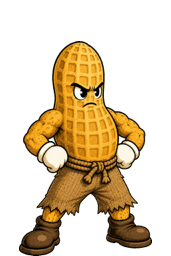
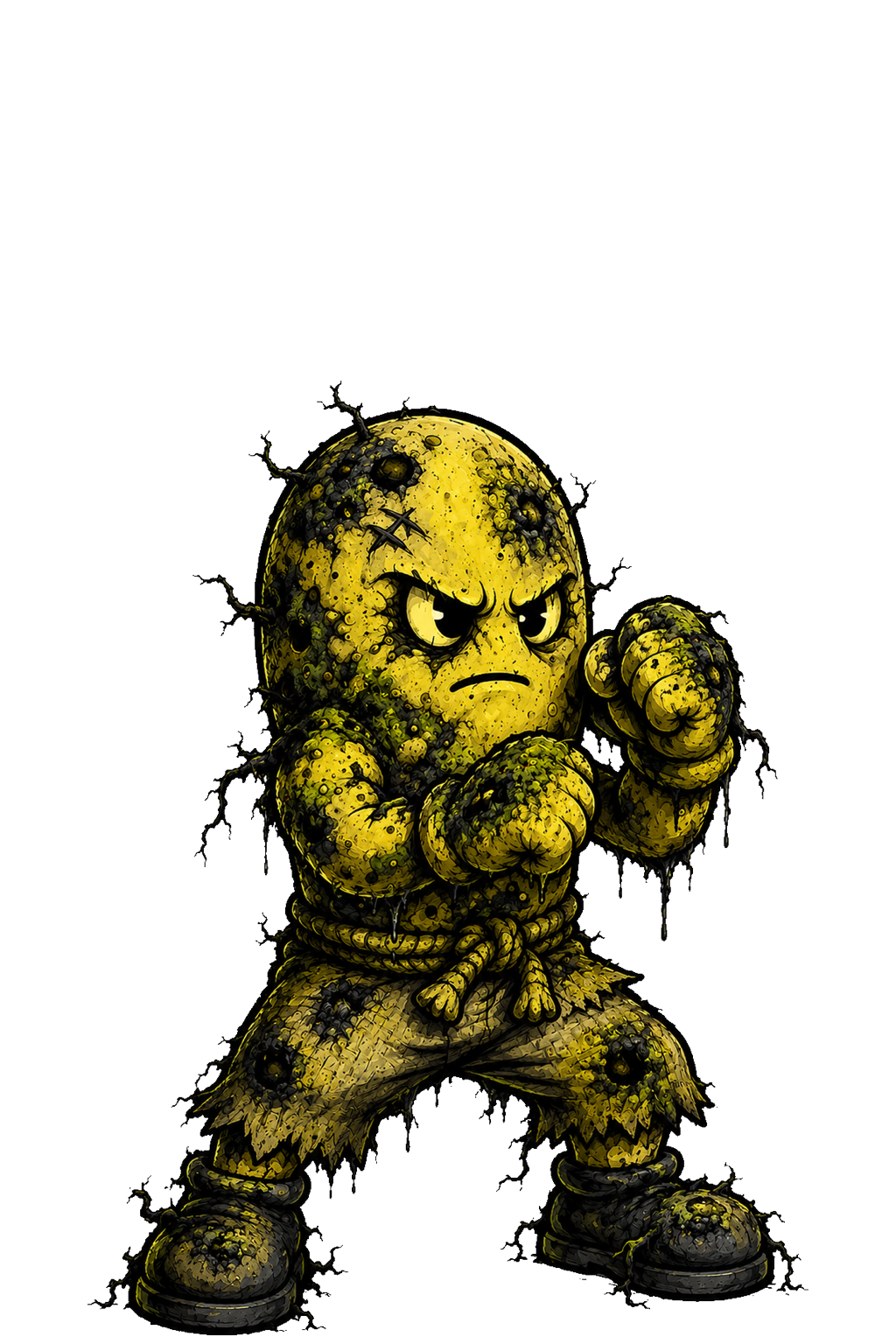
Tater, the determined potato, in fighting stance

Static fallback — with JavaScript enabled, this panel is a playable slice of Classic mode: the potato falls under launch-gradient skies, and you tap to thread it through the gaps. Without JavaScript, take our word for it — or better, don't: the App Store build is the real thing.

The mission of Tater Dash is to tell a story about a Potato seeking to find his purpose — to become a Tater Tot hero. Story mode is full of instances speaking to this, and tons of reflective moments. Deep down, the game is a fun 2D fighter.

Classic
The old flappy-bird-like game, renamed and kept — tap to flap, thread the gaps, chase the high score. Honored above; not where development points.
Story mode — main direction
Very story-driven, and playable between meetings: a short slice of story before and after levels, plus unlockable fights you can put off.
Versus mode — main direction
The 2D fighter underneath it all. Two potatoes, one line of scrimmage, football physics — built for "run it back."
The number
Real players on the leaderboard. Currently 5 of the target 10 — stated honestly, because the scoreboard is the brand.

The lore — the pursuit of O

Mature themes, handled with purpose: sickness, body dysmorphia, depression, loneliness — all centered around the pursuit of O, which is intrinsically tied to the notion of scripture without seeming like it. In every story mode, revealed or not, Odie takes what he gets from O and uses it to dramatically impact the lives of those he meets.

The world is under attack from four factions — potato beetles · birds · late blight · spuddies (dead set on vengeance against potato kind). Relatively easy levels so far, to be developed later; the background story runs conversationally through them.

The tournaments are the world's answer: it is set up to bring the best out of people by compelling them to compete and train, so they might better serve the world's good.

And on the moon, two watchers: Ghost, the ghost pepper — a nightshade, like Odie — the destroyer, considering annihilating the planet because it has fallen into vain, prideful, sinful behaviors; he thinks it's time to start over. Dragon, the dragonfruit — a bit sweeter — believes there is still hope, and constantly takes on the burden of rallying and inspiring people. That's what the tournaments do. Ghost is always watching. (Character entries: section 07.)

The sleep canon · answered 2026-08-03

The only morning he remembers

Every Odie story begins the same way: he wakes up having forgotten his past. Tater Dash is the only time Odie has ever gotten to sleep and woken up able to remember the day before. That is the emotional spine of this game — the whole brand stands on one good morning.

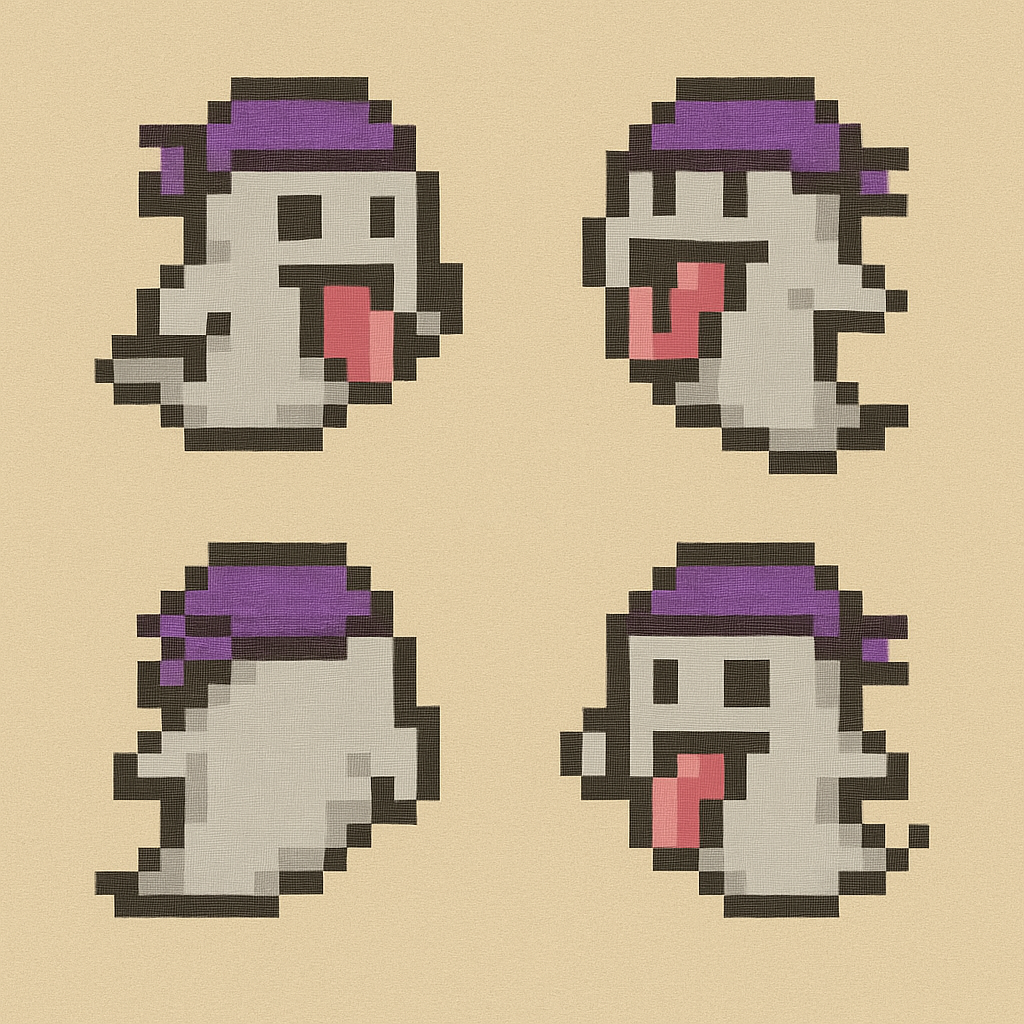
Ohm — the friendly boo who gives the player diamonds — remembers. Diamonds are Ohm's memory; every one handed over is a piece of a day that, for once, didn't disappear.

Cross-IP law: the time skip is Potato Literature's infinite loop, and this is what escaping it feels like. Never trivialize the escape.

Ohm, the friendly boo: a purple-bandana ghost, tongue out, in four pixel-art frames on a sand-colored field
Ohm — the purple-bandana boo, 4 frames · pixel art, shown at native square aspect

Progression & economy — answered 2026-08-03

UnlockHow it's earned
New skins — Versus, potentially Classic tooFruits of the fights
Certain charactersIn-app purchase
Certain charactersGuaranteed unlocks through story mode
Certain charactersStory-mode high scores — stars collected, 1 / 2 / 3 per game
Certain charactersBeating certain versus modes
Certain charactersCertain collections of collectibles
Leaderboard profile cardCustomizable with cosmetics unlocked from a variety of places
Diamonds — the currency in the universeThe diet everyone runs on, given to the player by Ohm. How diamonds trade against the unlocks above is deliberately unspecified for now

Personality

Determined
The title potato's face is the brand: brow down, moving forward, on fire.
Scrappy
Rubber-hose fighters in burlap shorts. Nothing polished past the point of charm.
Committed
The core mechanic is the personality — every swing is a commitment that can be punished. The game rewards daring.
Arguable
Built for "run it back." Versus exists because a solo high score never settled anything.

Construction principles

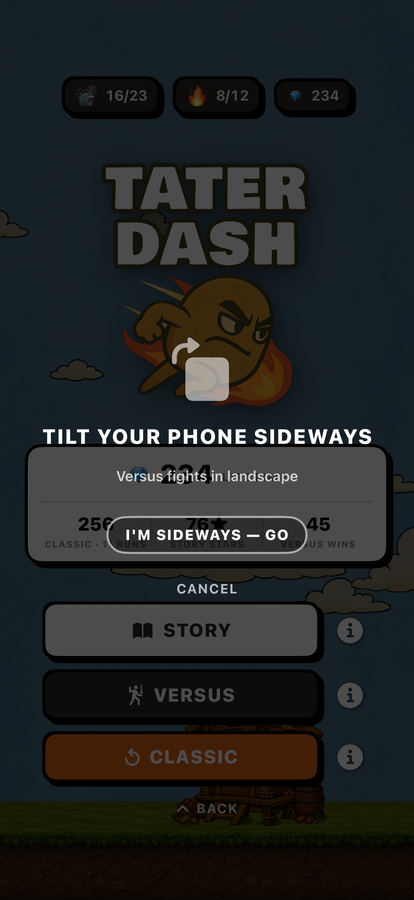
  1. Arena mode turns the phone. The game launches portrait, and versus asks for the turn — "TILT YOUR PHONE SIDEWAYS" is a shipped instruction. Rotating the device IS arena mode.
  2. Commitment reads on screen. Telegraphs, freezes, and impact frames — the art direction serves the punish.
  3. Diamonds are the diet. The currency in the universe — one currency across Classic, Story, and Versus, handed to the player by Ohm; they are also Ohm's memory.
  4. The scoreboard is real. Leaderboard counts are honest or they are nothing.

Corrected 2026-08-03: a fighter is not a color — guard-bubble colors are a fight-readability convention only, so the old "every fighter is a color" principle is retired.

Section 02 · proposed

Logo System

The title card is the mark: outlined caps and a potato mid-dash, flame trailing.

Tater Dash title mark on cream
title mark on cream — default
Tater Dash title mark on dark brown
on dusk — the outline carries it
Tater Dash app icon on Fiery Orange
app icon on Fiery Orange — the store face
Tater Dash title mark on Golden Shade yellow
on Golden Shade — reward surfaces
Tater Dash title mark on the tri-orange launch gradient
on the launch gradient — hero moments

Anatomy & rules

Two parts, separable: the lettering (chunky caps, ink outline, white fill) and the dasher (the determined potato with its flame trail). Together they are the title card; the dasher alone can carry small placements. Clear space: the height of the flame. Minimum: 44 px for the dasher, 120 px wide for the full title card.

standalone lettering-only wordmark file — the title art is one flattened image; split the layers

Do

  • Use the title card over game art — the outline is built for it
  • Let the flame overlap edges; it's a dash, not a badge
  • Use the dasher alone at small sizes

Don't

  • Recolor the flame outside the flame ramp
  • Straighten the potato — it leans because it's moving
  • Set the title card static-level on legal or settings surfaces

Section 03 · proposed

Color

The tri-orange sky, a potato-brown earth, a guard color for every one of the 32 fighters, and an HP bar that tells the truth.

A/B — try the document at dusk (the Manor & Tunnels world):

Primary — the launch gradient, inherited from Potatuhs

Fiery Orange

#E16416 · CTAs, the P punch button

Morning Sienna

#E19816 · the A kick button, warmth

Golden Shade

#E1C916 · the O focus button, rewards

Gameworld — body, earth, flame

Potato Body

#C48529 · the hero's own skin

Dark Brown

#2D2A26 · dusk surfaces, depth

Flame Ramp

#F58D22 → #D35325 → #952538

Guard-bubble UI colors

  • Tater#F58C24
  • Butter#FAD940
  • Burlap#8C663D
  • Blight#73B84D

Guard bubbles, focus motes, and HUD accents render in the owner's guard color — a fight-readability convention, nothing more. A fighter is not a color (Brett, 2026-08-03): these are tokens because combat has to read at a glance, not because characters reduce to palettes. The founding four are shown here; all 32 guard colors live in tokens.css and render as the dots beside every fighter in section 07.

HP semantics

#4DC759 safe · #F3D433 caution · #E16416 warning · #DB332E critical. Status colors are reserved — never decorative.

Pairing & contrast — measured, recorded honestly

PairingRatioWCAG AA
Ink on Cream15.0 : 1PASS — all text
Cream on Dark Brown13.8 : 1PASS — all text
Butter on Ink12.1 : 1PASS — all text
Blight on Ink7.0 : 1PASS — all text
Fiery Orange on Cream3.1 : 1large text / UI only
Blight on Cream2.1 : 1decorative only

Rule: fighter colors live on ink or in bubbles — never as text on cream. Body copy is Ink-on-Cream or Cream-on-Dark-Brown. The launch gradient (180°, orange → sienna → gold) backs hero moments only.

Section 04 · answered 2026-08-03 — approved, awaiting formal lock

Typography

Bowlby One SC for the plaques, Kongtext for the arcade guts — both ship in the binary. Brett: "i like our typography choices."

A/B — which face leads the brand? Try the pixel arcade voice:

FIGHT

hero · display · clamp(2.8rem → 5.5rem)

Choose your fighter

h1 · display

HIGH SCORE 00909

arcade · Kongtext · scores, tickers, retro plaques

Every commitment is a chance to push — or eat a punish.

h3 / taglines · Outfit 800

Body is Outfit, per the umbrella. Player names, match stats, and store copy set in the body face — the display faces are for plaques and moments.

body · Outfit 400

room-code A7F2 · com.hotpotatogames.taterdash

mono · JetBrains Mono · codes, IDs

Division of labor

Bowlby One SC is the poster voice — titles, fighter names, mode plaques. Kongtext is the machine voice — scores, timers, anything the arcade cabinet itself would say. They never share a line. The in-app sticker buttons currently set their letters in AvenirNext-Heavy — a system-font relic, flagged for replacement with Bowlby.

Do

  • Bowlby for names and plaques; Kongtext for numbers the game speaks
  • Outfit 700–800 for dynamic text needing weight
  • White fill + ink outline for lettering over game art

Don't

  • Mix Bowlby and Kongtext in one line
  • Ship AvenirNext-Heavy in any new surface
  • Set body copy in either display face

Section 05 · proposed

Iconography

The verb stickers are the icon system: P · A · O · T, round, colored, pressable.

Tater Dash's icons are its controls. Four round stickers carry the whole verb language — Punch, Kick (A), Focus (O), Clinch (T) — each on its assigned brand color. Beyond the stickers: the diamond (currency, four shimmer variants), heart pips (HP), and Lucide inherited for chrome the game doesn't own.

punch

kick

focus

clinch

ElementRule
Sticker geometryPerfect circle, 3px ink border, hard shadow; letter in the display face
Color assignmentP orange · A sienna · O gold · T white — fixed, never swapped
DiamondThe one collectible glyph; four shimmer frames; never recolored
HeartsSegmented HP pips in the HUD — status, not decoration
Chrome iconsThe canonical HPG seven (below) — Lucide, stroke 2, 24 grid, flowed down from the parent

The umbrella chrome set — the canonical HPG seven

Adopted from the declared Hot Potato Games icon set (context: potatuhs-design Iconography.jsx). This set supersedes every ad-hoc subset and flows down from the parent — where Tater Dash needs chrome the game doesn't own, it draws from these seven first.

gamepad-2 · Gamepad

trophy · Trophy

dice-5 · Dice

swords · Battle

users · Multiplayer

timer · Timer

crown · Leaderboard

Section 06 · proposed — rebuilt 2026-08-03 after Brett's shred

Illustration

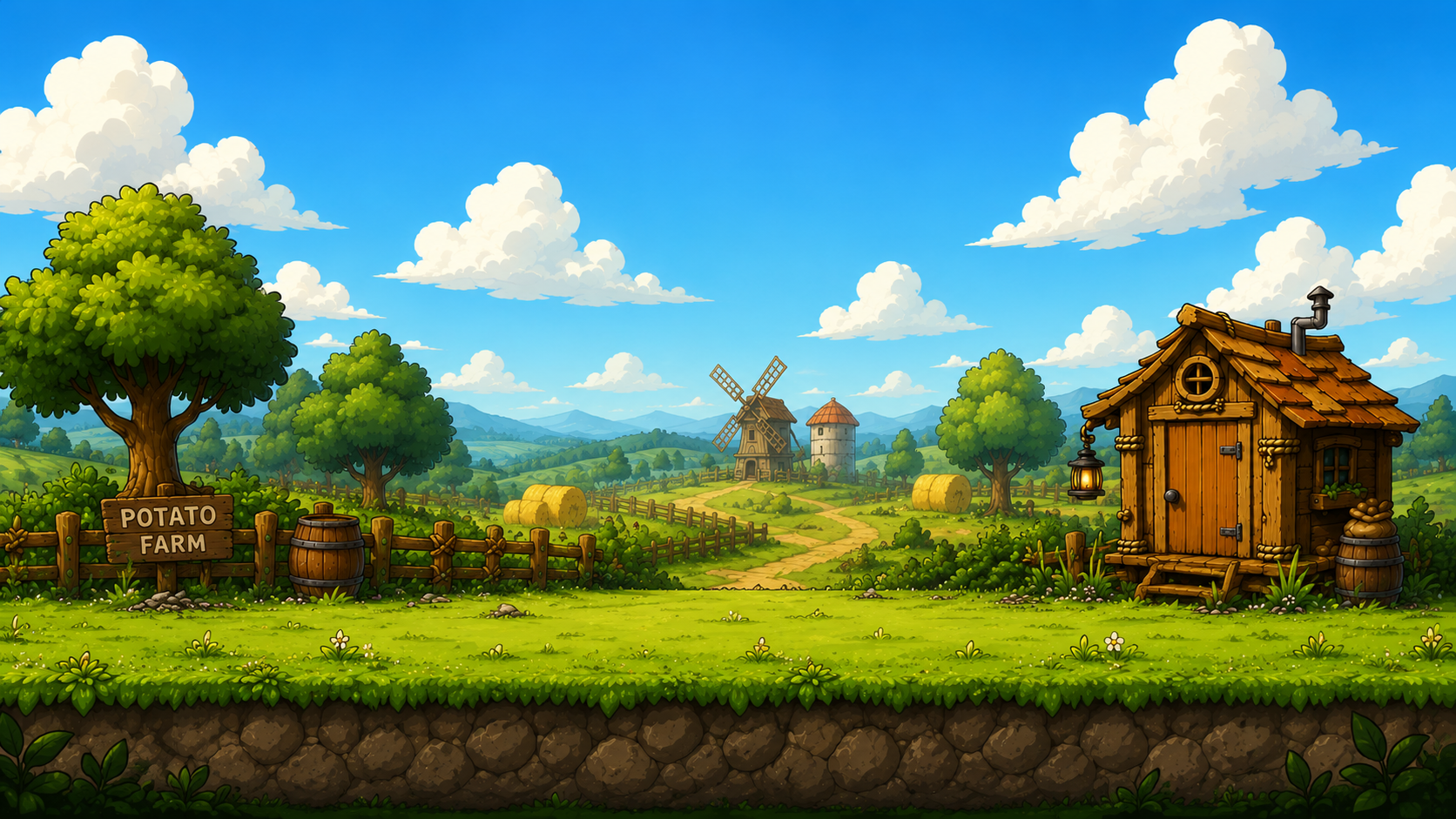
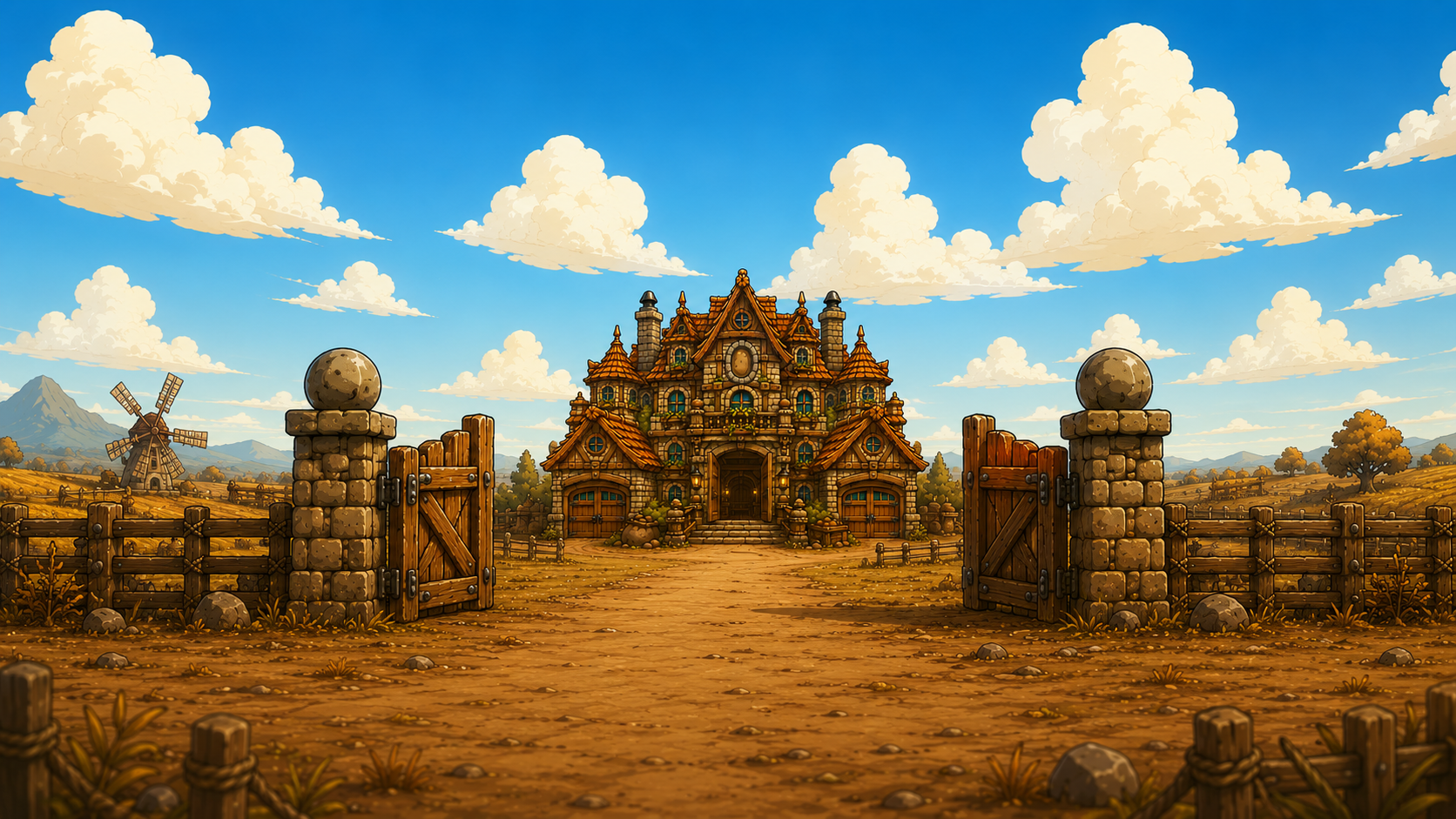
Rubber-hose fighters on painterly-pixel fields — 205 imagesets of one world, every one shown the shape it actually is.

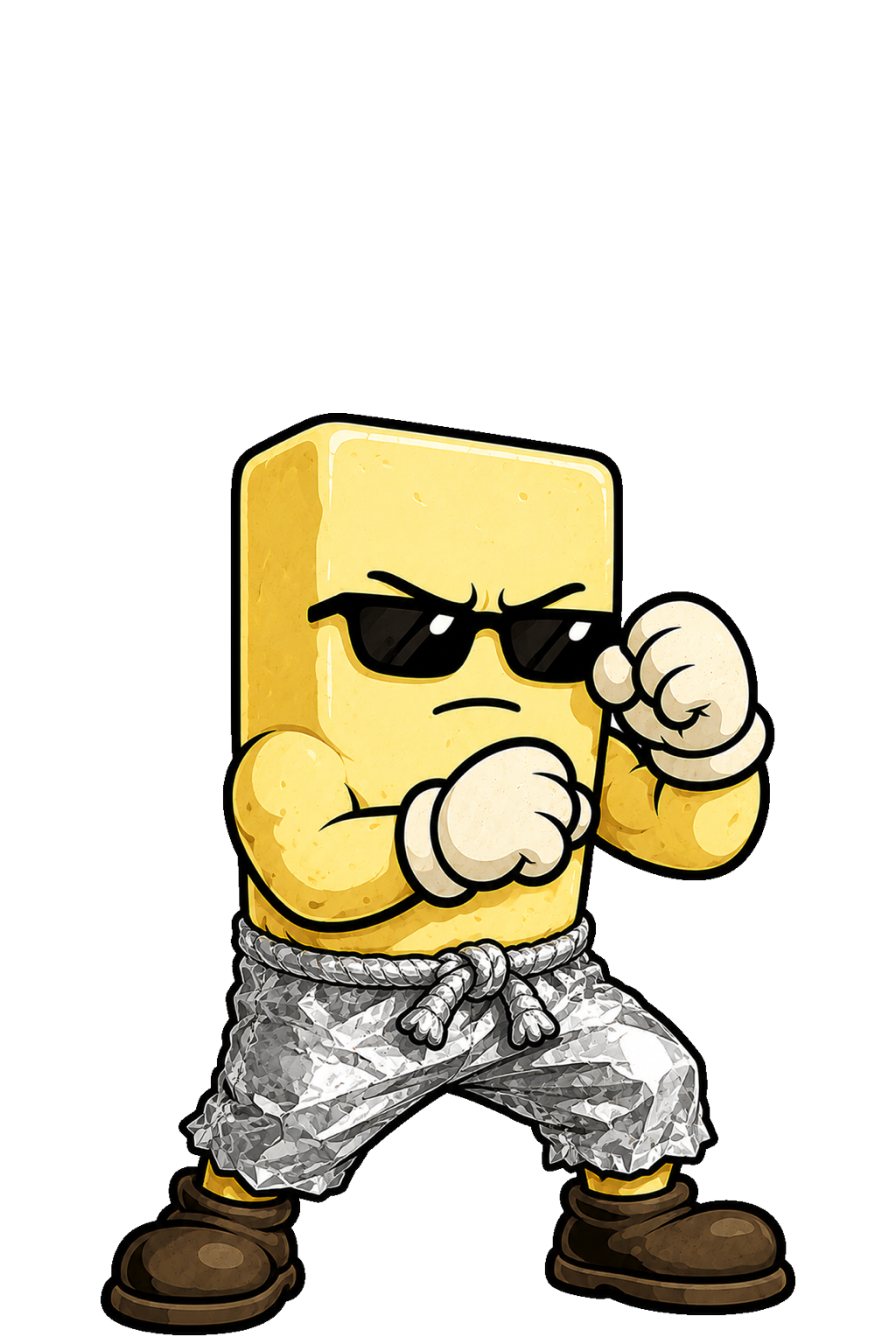
Native aspect ratios are law (Brett, 2026-08-03): every image renders at its measured pixel proportions — arenas are landscape (1672×941) and stay landscape; fighters are portrait (1024×1536) and stay portrait. No cropping a world into a frame it didn't ask for.

Potato Farm arena: a lush pixel-painted farm with windmill, hay bales, and a wooden shack under a blue sky
Potato Farm — versus arena · 1672×941, native landscape
Rubber-hose fighters
Gloves, boots, bendy limbs, thick ink contours. Every fighter reads at thumb size.
Painterly-pixel worlds
Arenas and parallax fields are lush and textured — storybook color, game-crisp edges.
Layered for parallax
Sky 0.1 · hills 0.3 · fields 0.6 · ground 1.0 — art ships as speed-banded strips.
Telegraph-first
Poses exist to be read in combat: wind-ups exaggerate, punishes land visibly.
The Manor arena: a grand pixel-painted interior backdrop
The Manor — versus arena · 1672×941, native landscape
Butter in fighting stance: a rubber-hose slab of butter with gloves up
Figure vs field — a fighter is portrait, 1024×1536

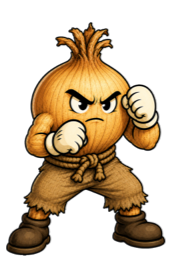
North star: the HPG Environment Style Guide v1.0 (filed under Tater Dash) — linework, texturing, palette, idle animation, tiling.

Section 07 · the roster made real — rebuilt 2026-08-14, doubled 2026-08-22 from code

The Fighters

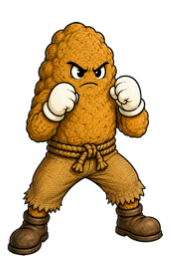
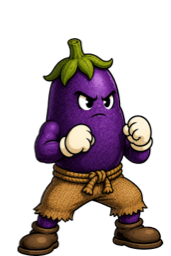
Thirty-two fighters — the 16 free story fighters (four worlds, a Mind·Soul·Body·Heart quartet each) plus 16 paid “aux” fighters in four packs of four. Every world below pairs its main 4 (story) with its aux 4 (that world's IAP pack), and every fighter now has real art.

Every portrait above is a real ready-frame sliced from that fighter's in-game atlas (the select-idle pose) — the whole 32-fighter cast, W2–W4 and the paid packs included. The rich per-fighter profiles and the psyche spine follow below.

World 1 · Earth Kingdom — Mind · Soul · Body · Heart

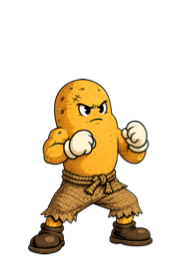
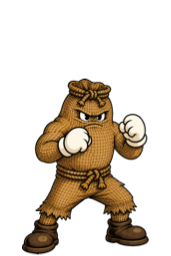
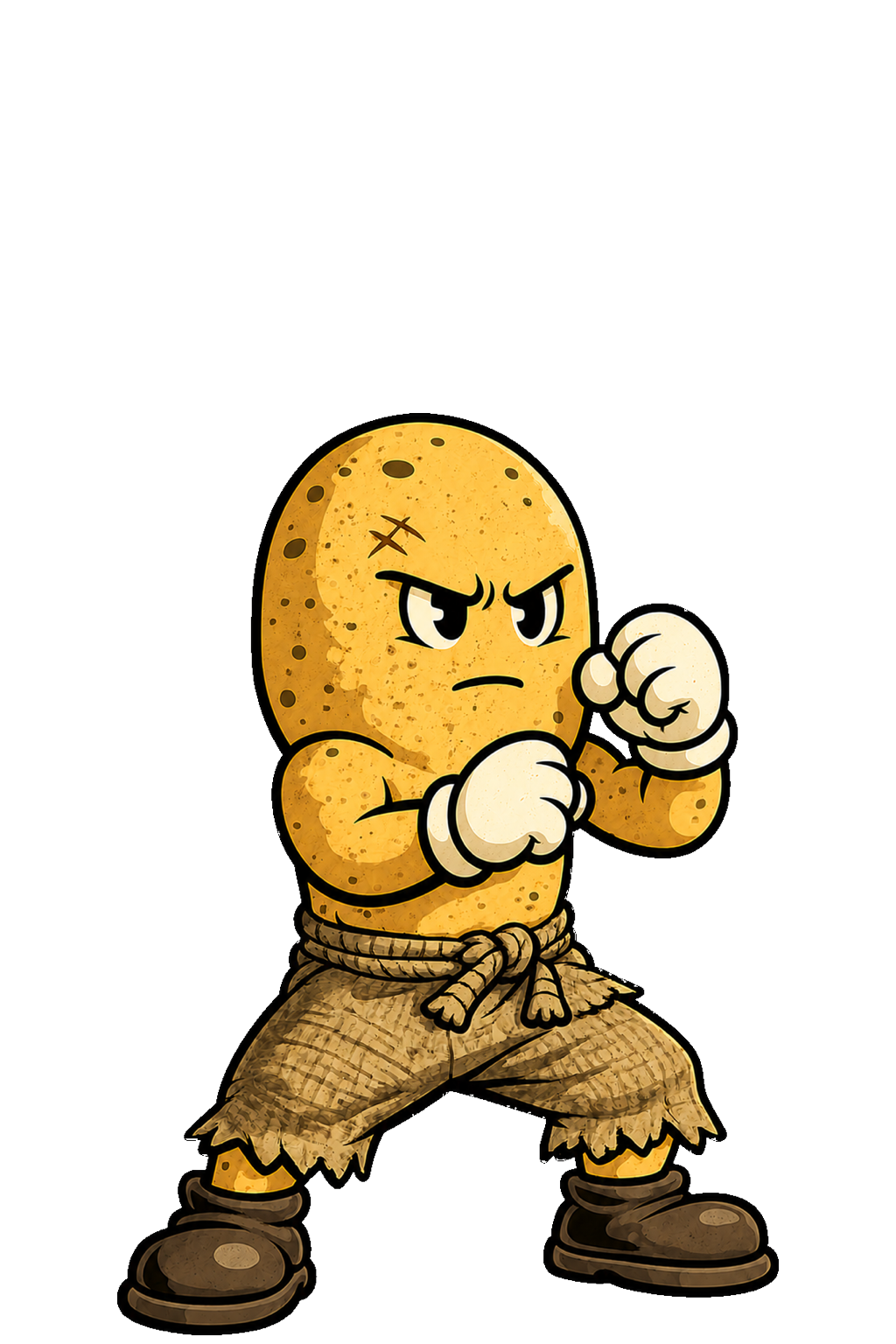
Tater in fighting stance: a determined potato in burlap shorts, white gloves, brown boots

Odie · “Tater”

The closer. Makes space, charges Focus to MAX, dashes in for the boop. Under ⅓ HP: ALL OUT.

Story

The purpose arc: a potato seeking to become a Tater Tot hero. Everything he takes from the pursuit of O, he spends on the people he meets. And this is the one story where sleep gives instead of takes — the sleep canon (section 01) is his morning.

Customer mirror: Ike — relentless self-improvement, at war with time, learning to step forward in faith instead of burning out (§16).
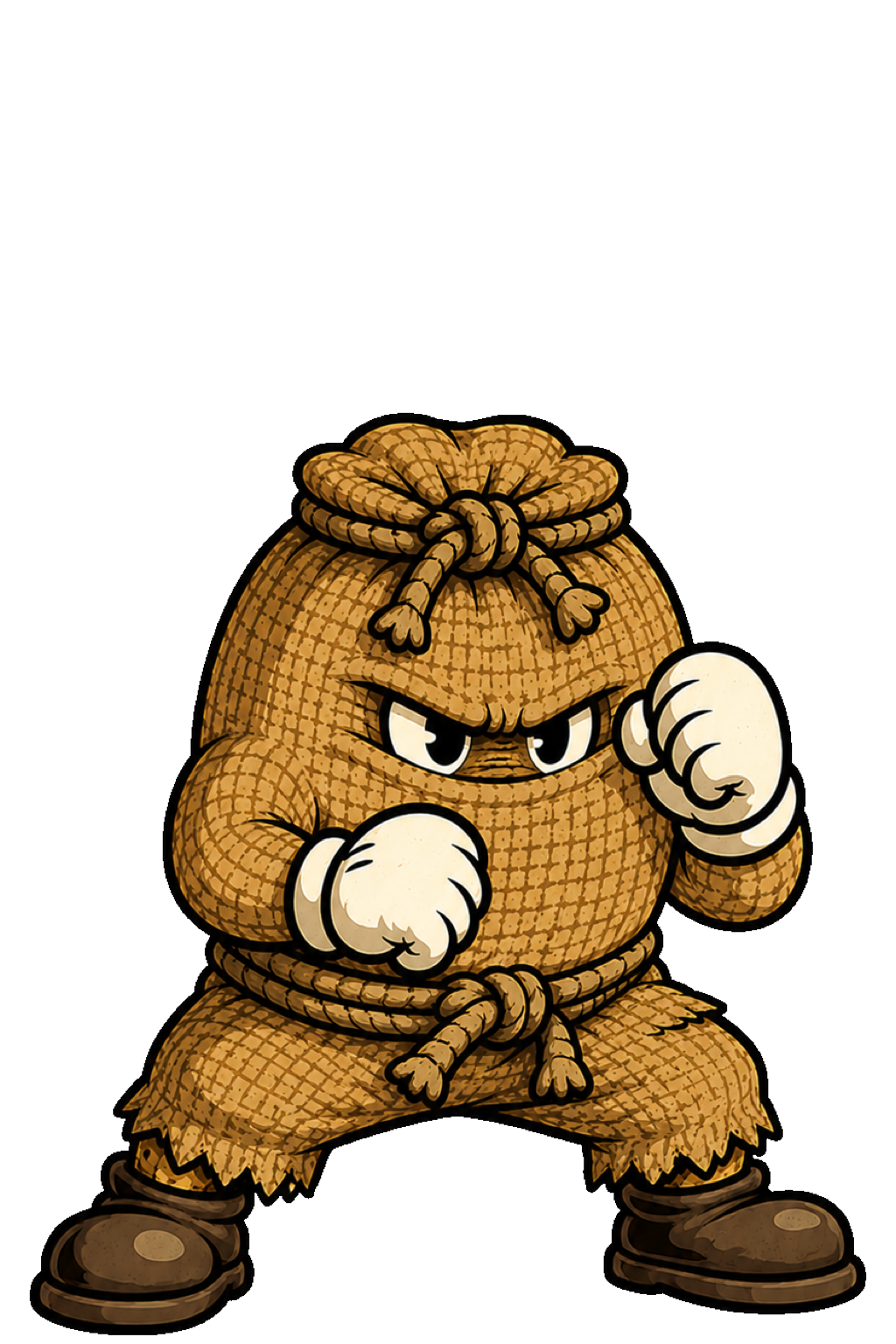
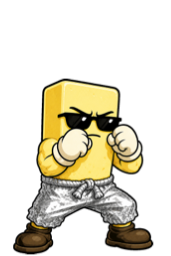
Butter in fighting stance

Chip · “Butter”

The slipster. Weaves punches, feeds P-mashers slip stuns, loves the rising uppercut. A butter chip in very good shape.

Customer mirror

Horatio — the aesthete with body dysmorphia who would rather train than perform; arrival that didn't answer the hollowness. Story slot open (§16 is the seed).

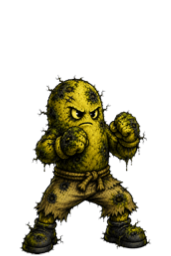
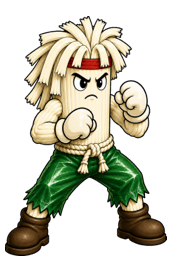
Burlap in fighting stance

Burt · “Burlap”

The drill. Walk in, one swing, back off. The easiest lesson in the ladder. In tune with the universe, keeps everyone's spirits up.

Customer mirror

James — the cheerful sack who feels empty inside; the good spirits are a shirt that stays on. Story slot open (§16 is the seed).

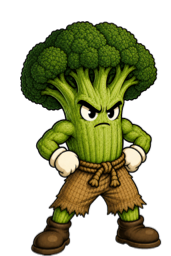
Blight in fighting stance

Eido · “Blight”

The aggressor. Full combo strings, hunts the clinch, throws from the lock. Thwomp his Late form for Hot Potato Mode.

Customer mirror

The shadow (not a customer) — a good friend before he got sick; now toxic, blames others, endangers everyone. Where any of the three lands if the fear runs the man. Also Conquest, the first Horseman.

World 2 · Underground Kingdom — portraits pending; spritesheets in-repo

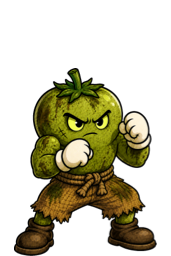
Gobie

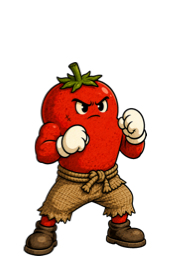
tomato · Mind — trains solo & serious; Vine Snare.

Story

Inspired by the Odie/Chip fight; becomes Odie's rival, later a training partner. His ambition is glory; Odie's is provision — they butt heads. Blames himself when his little brother is taken.

Woody

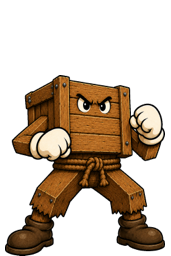
wooden crate · Soul — summons a marching minion; Crate Minion.

Story

Gobie's buddy, Burt's crate-equivalent; the two containers butt heads then find they're kindred. Shoulda/woulda/coulda who builds instead of committing — yet always there for his kids.

Strings

mozzarella stick · Body — massive aura, long reach; Stretchy Backhand.

Story

Tall and lanky, can't put on weight and it drives him crazy. Last competition he stopped only for fear of hurting Gobie — revealed to Odie through Ohm while Strings prayed after eating a diamond.

Gobbo / War

unripe tomato · Heart — the little rascal; Greatsword Slash.

Story

Gobie's kid brother — young, ambitious, told he's not old enough. Whispers in Eido's ear then betrays him for Ghost's crew; released the blight ghost and faked the postponed-fight message. This is what makes Odie and Gobie rivals.

World 3 · Cloud Kingdom — portraits pending; spritesheets in-repo

Kofi

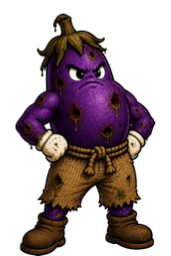
eggplant · Mind — big, sturdy, slow, barely budges; Egg Mine.

Story

The social mender — unites the nightshades, getting Odie and Gobie to stop being antagonistic and train together as the blight threat becomes clear.

Bach

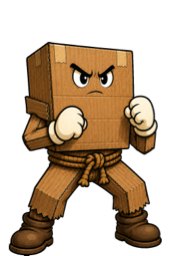
cardboard box (snake inside) · Soul — Snake Strike.

Story

Everyone underestimates him, but he's a real contender: flung around easily yet conforms back fast, with mid/long-range bite. Kofi's friend — formless, now taking form. Extremely emotional, misunderstood.

Oli

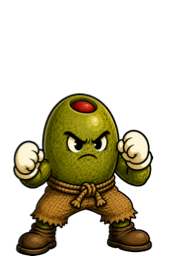
olive · Body — short, scrappy; Toothpick Javelin.

Story

Little-man syndrome — constantly picking fights but always learning. Kofi's friend, hits it off with Woody; his arc is toning down the aggression and one day opening his own dojo.

Reggie / Famine

ravaged eggplant · Heart — sparse aura, world-4 rules early; Slow Aura.

Story

Mistaken for Kofi; insists he's Reggie. A past champion who returned through the reality gap into a massacre — cold, ruthless, body too weak to heal. When Kofi departs this plane, Reggie returns in his place; his friends do not abandon him.

World 4 · Lunar Kingdom — portraits pending; spritesheets in-repo

Opie

jalapeño · Mind — fastest in the game; Fire Breath.

Story

Spicy so nobody wants to eat him; already victorious, at war with the microbes, framed positively — he faces his weakness by choice.

Tikaba

plastic bag · Soul — Stun Burst.

Story

A bag of air; one of many on Ghost's rotten team; helps capture Eido. Tough. An emotional vessel — high highs and low lows.

Moe

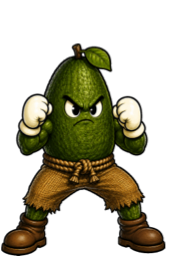
avocado · Body — Avocado Pit.

Story

the endomorph, a bit bummed about his reality — story slot open, Brett fills this in a sentence

Ghost / Death

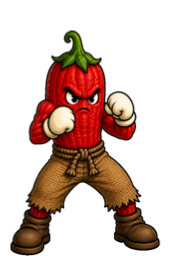
ghost pepper · Heart — fastest, fights dirty; Uppercut Slam.

Story

King of the Lunar Kingdom, head of the rotten team; took Eido, KO'd Burt and Chip. Seems evil but it's a misunderstanding — Eido had infected his friends; he and Dragon are buddies. Cheats (wins by DQ); believes death is a return to the Father; filled with wrath by O because it reminds him he lost. Odie changes his heart.

The roster is wired, drawn, and doubled — 2026-08-22. All 32 fighters are defined in code today (CharacterRoster.swift · VersusCharacter.swift · ExpansionPack.swift) — the 16 free story fighters plus 16 paid aux fighters in four $0.99 packs (Produce · Underground · Skyward · Cosmic) — each with a guard color, a play-style, a signature special, and an unlock path, and every one now has real art (shown in the gallery above). Two unlock lanes: story fighters cost a story-reach + a win + diamonds; pack fighters are granted directly on purchase. Dragon (dragonfruit) is now a pickable Pack-4 fighter and keeps his lore final-boss canon — no longer hidden off the select screen. The whole cast is clinch-enabled (the old “paid produce are clinch-immune” rule is retired).

The four worlds — each a quartet, unlocked by clearing the last

WorldFighterSpeciesPlay-style · signatureGuard
W1Odie “Tater”potatothe closer; Focus→MAX, ALL OUT under ⅓ HP · Meteor Mash#F58C24
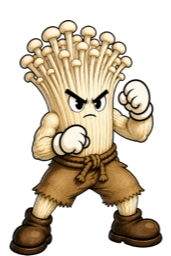
W1Burt “Burlap”burlap sackthe drill; one swing per 3s · Clone Teleport#8C663D
W1Chip “Butter”butter chipthe slipster; weaves, slip-stuns · Counter Blink#FAD940
W1Eido “Blight”late blightthe aggressor; Hot Potato Mode · Blight Field#73B84D
W2Gobietomatorival→teammate; juicy knockback · Vine Snare#D93329
W2Woodywooden cratespawns crate-minions from his head · Crate Minion#9E7042
W2Stringsmozzarella sticklong reach, flexible · Stretchy Backhand#FAEBB8
W2Gobbounripe tomatoGobie's kid brother · Greatsword Slash#8CB847
W3Kofieggplantthe mender; sturdy, slow · Egg Mine#6B3D8C
W3Bachcardboard boxsnake-in-the-box, underestimated · Snake Strike#B88C57
W3Olioliveshort, scrappy · Toothpick Javelin#808C38
W3Reggieravaged eggplantmistaken for Kofi · Slow Aura (rot DoT)#523366
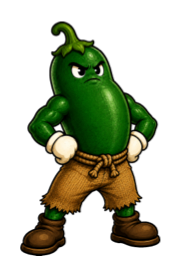
W4Opiejalapeñooverpowered, positive · Fire Breath#4DA638
W4MoeavocadoOpie's training partner, usually wins · Avocado Pit#85994D
W4Tikabaplastic bagStun Burst (melting-plastic bind)#CCD1D9
W4Ghostghost pepperthe destroyer, fights unfair · Uppercut Slam#E6591F

Guard colors derived RGB→hex from VersusCharacter.swift. Specials share one grammar: ↓↓↓ + world-direction + archetype-verb (W1 down · W2 up · W3 left · W4 right) — the input encodes the world.

The unlock ladder — all 16 are free

None of the roster is paid. The 16 unlock through story progression, each a two-step gate: a story milestone unlocks the fight against a character, and beating that character unlocks them as playable. Once a fight is unlocked you can initiate it any time in any Versus mode with character select — except multiplayer. The paid expansion packs (§17) are a separate produce cast, never these 16.

MilestoneUnlocks
defaultOdie · Burt
play Story onceChip (fight)
complete W1 A4Eido
complete W1 → opens W2—
begin W2 storyGobie
complete W2 A2Woody
complete W2 A4Gobbo
complete W2 A6Strings
complete W2 → starting W3Kofi
complete W3 A2Bach
complete W3 A4Reggie
complete W3 A6Oli
begin W4 storyOpie
complete W4 A2Tikaba
complete W4 A6Moe (avocado)
complete W4Ghost

W3 A6 = Oli (confirmed; Gobbo unlocks once, at W2 A4). W4 has no A4 unlock by design — a tetrad's fourth world caps at the antagonist (completion → Ghost). The pattern generalizes: completing a tetrad's 4th world unlocks its antagonist; beginning the next tetrad unlocks two — the standard + the sparring partner.

The Four Horsemen. The four antagonists are the Horsemen — Eido = Conquest (white fire) · Gobbo = War · Reggie = Famine · Ghost = Death, the true antagonist and king of the Lunar Kingdom. Each world's health-gate tightens: W1 half HP · W2 quarter · W3 eighth · W4 zero. The extended cast is real but NOT one crew yet — never market them as an assembled team.

07.1 · answered 2026-08-14

The tetrad architecture — Mind · Soul · Body · Heart

The four archetypes that order every world's quartet also order the four tetrads of Odie's arc, one scale up — the same rules at both scales. Mind, Soul, and Body are a trinity; the Heart is the fourth — the hardened antagonist welcomed in and made new by proximity to the trinity. The hermetic key: the All is Mind — Odie understands soul, body, and heart through mind.

ArchetypeFightersWhat it is
Mind — protagonistOdie · Gobie · Kofi · Opiethe Focus meter is Mind's mechanic; Odie's arc is metanoia — changing his mind, pursuing God through O, honing focus to become a hero
Soul — containerBurt · Woody · Bach · Tikabathe vessel you pour into; extremely emotional, high highs & low lows. Burt empty; Woody shoulda/woulda/coulda; Bach formless→form; Tikaba a bag of air. Shattered pieces needing Mind/Body/Heart for integrity
Body — the materialChip · Strings · Oli · Moereality, constraint, limitation before the individual: a fit body that sees fat (Chip); lanky (Strings); small (Oli); endomorph, bummed (Moe)
Heart — the HorsemenEido · Gobbo · Reggie · Ghosthardened hearts softened by Mind–Soul–Body; each fight ends in a heart made new, not a kill

The four stages — tetrads as Odie's transformation

TetradArchetypeStage
T1 · W1–4Mindpre-tater — before he can transform; once a fat potato, he broke it, and Tater Dash begins
T2 · W5–8Soulbreaking the mold — goes Greater Tater (sun-crisped into a hash / a tot); temporary. A potato-only privilege — the same sun only sun-dries a tomato or eggplant
T3 · W9–12Bodysustained, yet despair — the Greater Tater becomes permanent, but insecurity returns: superior here, yet Greater Taters are common, so he doubts his form
T4 · W13–16Heartthe Greatest Tot — service over ambition (heal the sick, disciple the young, feed the hungry, be present for the mourning and dying); a light on a hill, unafraid to be seen, facing problems head-on

The Heart made new — the four Horsemen

Eido / Conquest
Sick, blighted, blames others, hateful yet surviving — a fighter, a hurt dog needing care. Odie interfaces with O; metanoia tells him to change himself, which changes how he meets Eido: scared of the outbreak → tries to care → takes the outburst → returns anyway, changed. A changed mind and heart.
Gobbo / War
Young, angsty, mad at his brother; wants war so the young overthrow the old, no regard for tradition or structure; hardened, softening with age, a background force of chaos.
Reggie / Famine
When Kofi departs this plane, Reggie returns in his place, grave wounds from the void (Kofi travels on, homeward to his friends). Where once no nightshades would be friends, Kofi had taught Gobie and Odie friendship — so when Reggie arrives, sensed-different, they do not abandon him.
Ghost / Death
Cries end this madness; the people are evil, they must all be replaced. Odie, having learned his lessons, changes Ghost's heart after their fight: there is one who already defeated death, and by following his path, greater things may be done.

T4 is taught through loss. The final tournament opens the tetrad — you lose. W13: win round 1, then lose. W14: win 1, win 2, then lose. W15: win 1, lose 2 — mirroring the archetype ladder (Mind's spirit → Soul's training → Body's “you've come so far” → the fall). In that despair Odie forsakes the tournament and revisits the old worlds, improving their conditions in his purified state, and comes out unaltered — impossible before. Peer pressure is the theme: the worlds that once dragged him down no longer can. Humbled, consistent anyway — the holy transformation.

The canon layer — added 2026-08-03

The in-game names are stage names. The fighters are the Originals, the first cast of the whole Potatuhs canon: Odie plays as Tater · Buddy as Butter · Burt as Burlap · Eido as Blight. Odie IS Potato Literature's Odie, post-time-skip — the time skip is an infinite loop, and getting out of it is epic-scale canon on the order of the origin story and of Tater Dash itself. Never treat the escape as backstory trivia. The later four (Odie · Gobie the tomato · Yogi the eggplant · Javi the jalapeño) are not a crew until much later in canon — never market them as one yet.

The supporting cast

Ohm — the narrator
The friendly boo who gives the player diamonds — and the one who remembers (the sleep canon, section 01). Seven mood portraits guide the Story; diamonds are Ohm's memory. Tactic for warnings, Remembered for the deep zone.
Odie O'Dool — the story hero
Chases the Prophecy O through the Fields — the lore bridge to Potato Literature.
The menagerie
Birds, beetles, spuddies, blight ghosts — Classic mode's escalation, each with its own sprite atlas. In Story they resolve into the four enemy factions (below).

Do

  • Keep guard colors consistent wherever fight UI appears — readability is the convention
  • Use difficulty order Burlap → Butter → Blight → Tater when listing
  • Let personalities speak through movement, not bios

Don't

  • Swap or blend guard colors between fighters
  • Pose fighters neutral — they exist mid-commitment
  • Use the versus roster in lesson or legal contexts

The moon, split by dominion — the one sanctioned circle in this book.

The moon — two dominions · answered 2026-08-03

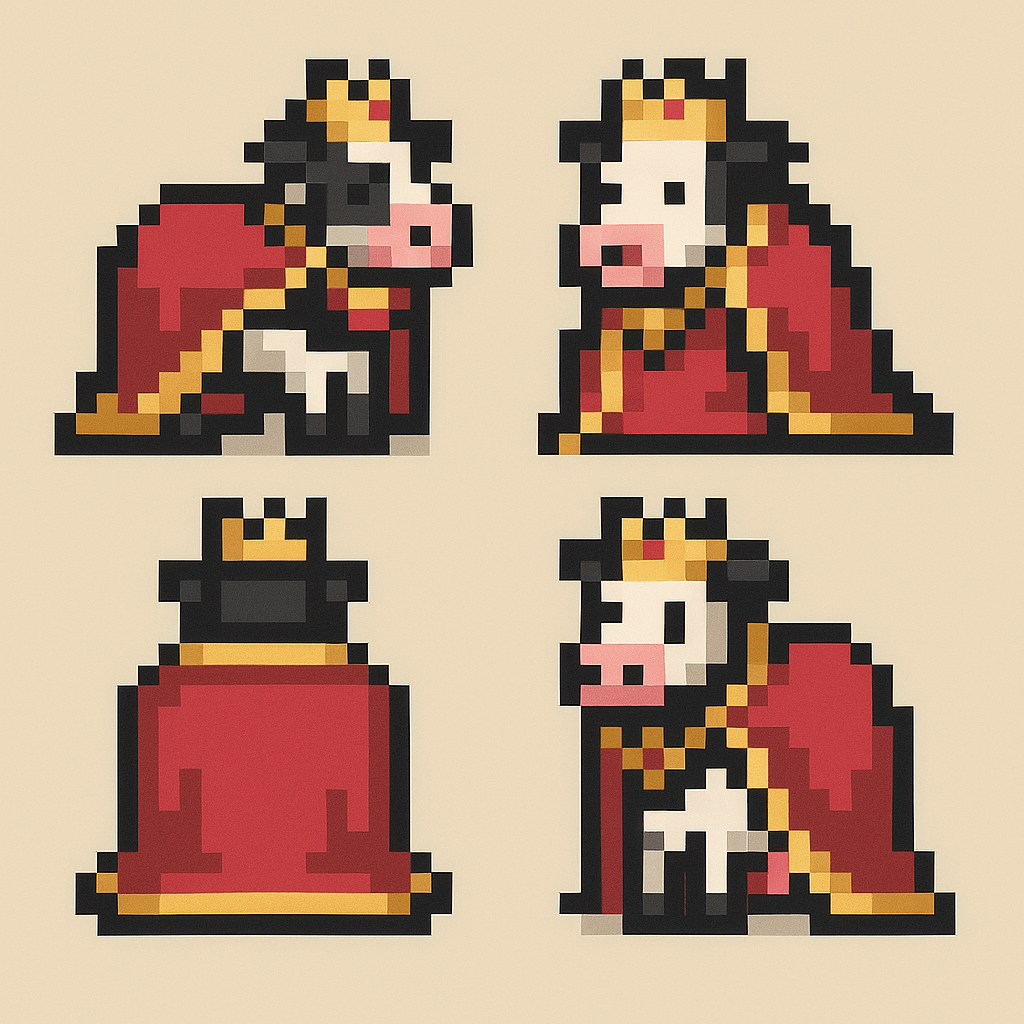
Sally — the bovine queen
Lives on the bright side of the moon and operates milk processing plants all over Earth. Villainous in the pre-timeskip arc; post-timeskip she plays that role less — but she still has that side in her.
Ghost — the nightshade
A ghost pepper — a nightshade, like Odie — with dominion over the moon's deep underground and the dark side. The destroyer: he is considering annihilating the planet because it has fallen into vain, prideful, sinful behaviors — he thinks it's time to start over. Ghost is always watching.
The shadow war
Sally and Ghost are in a shadow war, and Ghost is a preferred alternative leader in it. Now that Sally is less evil, things have calmed down.
Ghost's predecessor
Cared less about the planet's lack of virtue — more that everyone was so weak. He lost. And Odie, without ever knowing it, had a lot to do with that defeat in his previous journey.
Dragon — the dragonfruit
A bit sweeter. Believes there is still hope, and constantly takes on the burden of rallying and inspiring people — that's what the tournaments do.

The tournaments are the hopeful side's argument made playable: the world is set up to bring the best out of people by compelling them to compete and train, so they might better serve the world's good. Every story-mode tournament beat sits inside this frame.

Sally, the bovine queen: a crowned cow in a red royal cape, in four pixel-art frames on a cream field
Sally — the crowned cow, red royal cape, 4 frames · pixel art, shown at native square aspect

Ghost & Dragon art — no art exists for either; no visual canon may be implied until it does

The four enemy factions — answered 2026-08-03

FactionStatus
Potato beetlesRelatively easy levels so far — to be developed later
BirdsRelatively easy levels so far — to be developed later
Late blightRelatively easy levels so far — to be developed later
SpuddiesDead set on vengeance against potato kind — to be developed later

The world is under attack from all four. The background story is conversational through these levels — lore arrives in dialogue between fights, never in cutscene lectures.

Section 08 · proposed — the overhaul direction, for Brett's shred

UI Components

Actual components, not mirrors: the leaderboard, the buttons, the fight menu — drawn in the brand's own chrome, grounded in the extracted specs.

Everything below is built from the measured system: ButtonFactory cornerRadius 10 / lineWidth 2, half-height pills, the HP triad, opaque ink strokes. The extraction-accurate v0.2 component tables remain in DESIGN.md history — this page shows the overhauled direction. Sample data is sample data; the real board is real players only (section 13).

Buttons — ButtonFactory geometry (cornerRadius 10 · lineWidth 2)

PRESSED

Primary is Fiery Orange with ink lettering; secondary is paper with the same 2px ink stroke; disabled goes warm-flat and drops its shadow — the game states limits, it never greys them into whispers. Press collapses the shadow and shifts the plate — depth is a physical promise. Focus ring: 3px Fiery Orange, always visible.

The leaderboard — you vs you, visible

TATER DASH · CLASSIC

1SPUDNIK01204
2MASHA01138
3YOU00982
4HASHBRAWN00944
5FRYDAY00909
—YOUR BEST01031

Rank in the arcade face, names in body, a profile-card chip slot per row (the customizable cosmetic from section 01's economy). The you-row is gold; the ghost row is your own best — you vs you rides along on every board.

The fight menu — the arena, landscape

Odie, player-left Burt, opponent-right
STARTSELECT
Verb diamond — O guard/Focus · P punch · A kick · T clinch — plus a movement stick and top-corner HP bars. Colors and layout from VersusController.swift.

Chrome — pills, badge, input, the triad

READY

Pills take half their height as radius (26pt → 13, straight from the HUD); the HP strip keeps the triad-plus-critical semantics from section 03.

Fighter cards — one size, every fighter

Tater idle sprite

Tater

the closer

Butter idle sprite

Butter

the slipster

Burlap idle sprite

Burlap

the drill

Blight idle sprite

Blight

the aggressor

Every card is one size — a fixed image box with the body pinned to the bottom, so a row never goes ragged. The sprite is contained, never stretched. No color strips on any edge; the guard color appears only as the small ink-ringed dot beside the name.

Section 09 · context

Shadows & Borders

Opaque offset shadows, ink strokes, pill plates — measured off the live HUD, not invented.

The family law

Everything chunky: 3px ink borders, hard offset shadows (4px 4px card · 7px 7px pop), never blurred, never transparent. Press collapses the shadow flat — depth is a physical promise, not a glow. The winner card in the app literally draws its shadow as a second offset shape node behind the panel.

card · 4px
pop · 7px

Radius logic

Pills take half their height as radius (26pt pill → 13, 34pt → 17, 38pt → 19, 46pt → 23 — straight from the HUD code). Panels sit at 14–18. Small chrome at 8–10. The document tokens (8 / 12 / 18 / 26 / 999) round that observed system.

Measured in the app — stroke & radius inventory

SurfaceValue
Quiet chrome (HUD plates, pills, damage cards)lineWidth 2 — VersusController.swift:205, 465, 2492
Structural strokes (HP bar border, panels, guard rim)lineWidth 3 — VersusController.swift:278, 366, 950
Winner panel / selected highlightlineWidth 3.5 / 4.5 — VersusController.swift:1253, 311
Buttons (ButtonFactory)cornerRadius 10, lineWidth 2 — ButtonFactory.swift:31, 39
Pills (ready / mode / action)cornerRadius 13 · 17 · 19 · 23 — VersusController.swift:462, 483, 995, 1313
Panels (pause, mechanics, winner)cornerRadius 14 · 16 · 18 — VersusController.swift:1073, 202, 947
Winner-card shadowoffset shape node behind the panel — VersusController.swift:1244

Rule: shadows are opaque ink, offset down-right, zero blur. Borders never drop below 2px on any pressable surface.

Section 10 · context

Motion

Commitment reads as asymmetry: short windups, long cooldowns — rises ease out, falls ease in.

Frame data is the brand's rhythm

Every swing telegraphs briefly, lands fast, and costs a long recovery — the punish window IS the personality. All numbers below are the shipping values in Versus/VersusConfiguration.swift.

BeatTiming
Punchwindup 60ms · active 120ms · cooldown 350ms (:116–119)
Kickwindup 125ms · active 120ms · cooldown 600ms (:124–126)
Combo chain windowsP 450ms · A 500ms · P·P·P recovery lag 600ms (:131–134)
Jumpairtime 800ms — "floatier arc" (Brett, 2026-07-24) (:44)
Dashout 300ms · return 120ms · cooldown 500ms (:48–50)
Thwompcharge 250ms · drop 180ms · landing lag 300ms (:69–73)
Countdown step700ms per 3·2·1 beat (:315)

Sprite loops & camera

AnimationTiming
Idle loop350ms/frame — VersusPlayer.swift:1658
Jump / dash / uppercut / KO180 / 70 / 90 / 120 ms/frame — VersusPlayer.swift:1661–1667
Runner idle / dash200 / 100 ms/frame — GameConstants.swift:64–65
Death arc (runner)rise 50pt/200ms · hold 200ms · fall 500pt/600ms — GameConstants.swift:68–72
Hit shake3 beats: 40 + 40 + 60ms — VersusController.swift:2628–2632
Announce popscale 0.6→1.0 in 200ms · hold 1.2s · fade 400ms — VersusController.swift:783–788
Follow camerazoom 1.0–1.35× · lerp 0.12 — VersusConfiguration.swift:105–106

Physics constants

runner gravity −9.8 (GameConfiguration.swift:107) · flap impulse 30 (GameConstants.swift:57) · walk 260pt/s (VersusConfiguration.swift:21) · launch gravity 1600pt/s² · wall bounciness 0.75 (:159–161) · A·A·A launch 700/320pt/s (:136–137)

Rules for any surface

  1. Rises ease out, falls ease in. Every vertical arc in the app pairs .easeOut up with .easeIn down (VersusPlayer.swift:266–275) — bounces obey gravity, not symmetry.
  2. Impacts are three frames. The camera shake is 140ms total; hit feedback never lingers.
  3. Announcements pop in, hang, and fade. Scale-up 200ms, hold, fade 400ms — the document's reveal timing (--dur-normal/--dur-slow) inherits this shape.
  4. Web timing tokens: fast 100ms · normal 220ms · slow 440ms, bounce ease for pressables — the doc-side rounding of the arcade's snap.

Section 11 · proposed

Layout

One hand, one thumb: portrait is permanent, and the world scrolls in speed bands.

The orientation law — corrected 2026-08-03

The game launches portrait, and arena mode turns the phone: versus tells you to "TILT YOUR PHONE SIDEWAYS" and renders its landscape arena by rotating content 90° inside the portrait scene — the OS never re-lays-out, but the player's device does turn. Web and marketing surfaces inherit the spirit: vertical-first compositions, thumb-reach controls, one dominant action per screen.

Parallax bands

sky · 0.1×
hills · 0.3×
fields · 0.6×
ground · 1.0× — the shack scrolls here

Document spacing — 8px base

Containers: narrow 46rem · default 72rem · wide 88rem. Ground lines are contracts — every arena declares its measured grass-top ratio, and art respects it.

Section 12 · context

Voice & Tone

The announcer shouts one past-tense verb; the store copy argues; the limits get stated out loud.

The arena voice — shipped strings

In-match copy is ALL CAPS, one beat, usually a past-tense verb with an exclamation mark — the machine calls what just happened and gets out of the way. Verbatim from VersusController.swift:

"FIGHT!" (:766) · "BOOP!" (:1544) · "CLASH!" (:1830) · "SLIPPED!" · "WEAVED!" · "ROLLED OUT!" (:1861–1869) · "DUCKED!" (:1885) · "CHECKED!" (:1894) · "SHIELD BREAK!" (:1908) · "LAUNCHED!" (:1953) · "CLINCH!" (:2028) · "DOMINANT!" (:2131) · "THROWN!" (:2250) · "BROKE FREE!" (:2289) · "CANNONBALL!" (:2390) · "TATER WINS" (pattern, :836)

Honesty is a voice rule

Limits are announced in the same voice as victories, never hidden: "NO CLINCH ONLINE — YET" (:2003) · "NO PAUSES LEFT" (:920) · "WAITING FOR OPPONENT..." (:2668). The rematch is a named ritual: "RUN IT BACK" (:1266) — a handshake, both players vote. Instructions stay imperative and literal: "TILT YOUR PHONE SIDEWAYS" (:725) · "TAP HERE TO RESUME" (:1111).

The store voice — shipped ad copy

"Tater Dash Versus. Because a solo high score has never won an argument."

the 5-second read — versus.json marketing.adRead5s; the cover tagline is its adaptation

Bumper stickers (shipped set)
"Push the line. Break the potato." · "HP dies. Position wins." · "The party fighter that shouldn't be this deep." · "Anchored. Igniting." — versus.json marketing.bumperStickers
Long-form rhythm
Short declaratives that stack: "Two potatoes. One battlefield. No auto-scroll." Ends on the offer: "Room codes. Real leaderboard. Free." — adRead30s
Company voice interplay
Butter (CMO) opens with the tagline, brief and smooth; Russ interrupts with his "uhhh…" tangent; Butter cuts back. The "uhhh…" belongs to Russ alone. — versus.json marketing.voiceNotes

Do

  • One beat per announcement — replace, never stack
  • State limits in caps, same voice as wins
  • Argue for versus: the copy picks fights, kindly

Don't

  • Explain a mechanic mid-match — teach in pause cards
  • Let the announcer editorialize ("NICE TRY!")
  • Give the "uhhh…" to anyone but Russ

Section 13 · answered 2026-08-03

AI Policy

Story is sacred; AI builds, trains, and stands in — always at human direction, always disclosed.

The story is sacred. AI never tells it.

The sacred law — HPG-wide, outranks every permission below. AI never creates or tells the story. It may fill in blanks or sections — composition only, at human direction — and it never injects its own side stories. Where any sanctioned use touches narrative, this law wins.

Three sanctioned uses — answered 2026-08-03

UseRule
Initial designsAI generates initial designs at dev time; a human approves everything that ships
Training against usersAI trains against players to produce more difficult enemies — in-house training only; player data still never enters third-party tools [derived]
Tournament stand-insAI fills tournament seats when people aren't there — always disclosed as AI, tagged out of real-session and leaderboard counts [derived from disclosure + honest-scoreboard rules]. Whether stand-in results count anywhere is an open item

Standing rules

SurfaceRule
Game codeAI welcome, directed live, human-reviewed before ship
Game artAI generation within the Environment Style Guide; human approves every shipped imageset (205 and counting)
LeaderboardReal players only. The KPI is honest or it is nothing — CPU fighters are labeled CPU, everywhere, always
Store copy & adsDrafted with AI, approved by a human, in the brand voice
Player dataNever enters third-party AI tools

Disclosure is the default. Tater Dash is built in the open with Claude Code. The versus bots have named personalities because honesty is a mechanic here: you always know when you fought Burlap the bot and when you fought your friend.

Section 14 · context

Sub-brands & Surfaces

A child of Hot Potato Games; seasons — roster waves of four — are the content architecture.

Place in the family

Parent
Hot Potato Games → Potatuhs. Where this book is silent, the HPG spec and the umbrella design system govern.
Siblings
Explore The Cell · Sod Tori — fellow HPG titles; Tater Dash is the fighting-game pillar.
Surfaces today
iOS App Store — the shipping binary (com.hotpotatogames.taterdash, repo FlappyTot).
Surfaces planned
A web port, post-iOS. Engine undecided.

web-port engine decision — Godot vs Unity vs canvas; no brand ruling until the platform is chosen

The seasons model — roster waves of four

SeasonContents
Season 0 liveThe current App Store build — classic endless, pre-relaunch. Retroactively labeled.
Season 1 in-flightThe release: story mode + the founding four (Tater · Butter · Burlap · Blight). The rubber-hose relaunch IS the season 1 drop.
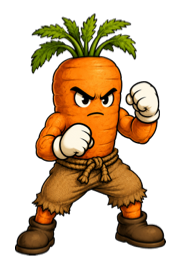
Season 2 pipelineThe second wave: Rot (green battered tomato) · Crate (wooden crate brawler) · Gobie (red tomato) · Strings (noodle-dread stringer).

Declared 2026-07-29 (yumutsu): each season is a content drop, and roster waves of four fighters are the season currency going forward. Spec + staged art: potatuhs-dashboard/src/data/versus.json (seasons block) + public/versus/season-2/.

Section 15 · context

Governance

One spec, one registry home, named consuming repos — nothing re-declares a brand value.

Source of truth

The spec
This book's DESIGN.md at the brands.potatocore.com registry (brands/tater-dash/head). The site renders it; the spec wins any disagreement.
Tokens
tokens.css + tokens.json, generated from the spec. No hex anywhere else — components only read tokens.
Consuming repo
hpg/FlappyTot — the game itself. The brand is ALWAYS "Tater Dash"; FlappyTot is a repo name, never a public word.
Asset naming (umbrella law)
{brand}-{category}-{label}-{season}.{type} — e.g. taterdash-icon-dasher-1.png

Governed references — where the numbers live

ReferenceOwns
potatuhs-dashboard/src/data/versus.jsonVersus Battle Arena spec: combat model, seasons ladder, marketing ad reads
potatuhs-dashboard/src/data/kpi.jsonThe KPI lanes: leaderboard · diamonds · assets
potatuhs-dashboard/src/data/taterdashAssets.jsonKey-art tally (with scripts/gen-taterdash-assets.mjs)
hpg/_status/tater_dash.mdThe live status board — session-by-session ship log
FlappyTot/Versus/VERSUS.md · ROSTER.mdCombat design truth · character canon wiring in-game

Change protocol. Brand values change in DESIGN.md first, tokens second, surfaces third. Game-design numbers (frame data, damage) belong to the game's own files — this book cites them, it never forks them.

Section 16 · answered 2026-08-14

Ideal Customer & the Psyche Spine

The root variables are fears & passions — not needs & wants. Three customers, one man at three stages of a body-transformation journey; purpose is the through-line. And the tie the book asks for: the roster IS the customer. We cast him, we don't lecture him.

Fighter (§07)CustomerPassion → FearWhat Tater Dash is to him
Odie “Tater”Ike — the relentlessGO, discipline → STOPPING (a rest day = becoming James again)the retention loop: the endless runner, the banked-forever diamond count, and the Fire cap that teaches guilt-free rest
Chip “Butter”Horatio — arrived, and emptyenjoying himself → “is this all there is?”the collection and the paying customer: the 16→64 roster and the $0.99 packs, with people as the off-ramp
Burt “Burlap”James — the escapistescapism / worlds → his shirt coming up, being seenthe escapism door and the free download. Sell the world, never the exercise
Eido “Blight”the shadow (not a customer)the fear running the man → sickness that becomes blamethe cautionary end — where any of the three lands untempered

The binding ethics rail

Leverage passions to serve; never weaponize fears. The story may dramatize the shirt-fear — Chip's dysmorphia, Burt's emptiness — with empathy and purpose. The store may never sell against it: no before/after shaming, no body-targeted copy. An artifact that only works by making the person feel worse is cut.

Body-composition stance. Not toxic body-positivity, not the harmful extreme — sub-7% is not the goal. For these men sub-20% is a great place: the you who can take his shirt off and swim without shame.

Leaderboard philosophy

Competition is there for you, but the lean is you-vs-you — yesterday's self is the rival (the “YOUR BEST” ghost row, §08). It serves Ike (self over war-with-time) and James (a ladder with no getting picked last).

Full profile: ic-profiles/hotpotatogames/tater-dash/ICP.md — derived as a facet of the parent James / Ike / Horatio roots, never new roots. This section is the in-book anchor; the ICP is the source of truth.

The arc is the argument. The deepest tie is the Mind·Soul·Body·Heart tetrad architecture (§07.1): the archetypes align with the customer roots — Mind = Ike (metanoia, the mind learning to change) · Soul = James (the empty vessel, the escapist) · Body = Horatio (arrival that is bodily and still unsatisfied) · Heart = the shadow (the hardened heart, redeemable). Odie's metanoia is the customer's transformation — the escapist who stops hiding, the relentless one who trades war-with-time for service, the arrived-but-empty one who finds purpose past the body. The Greatest Tot is the image of the outcome: a man who takes care of himself so he can be a better father, brother, son, friend, and community member. We don't argue the transformation — we make it playable.

Section 17 · answered 2026-08-14

Go-To-Market

A free-to-play iPhone game whose product is in-app purchases. Grow downloads first; the KPI gate is ten real leaderboard players; the web port is the expansion, not the launch.

What is actually sold

Expansion packs — the headline
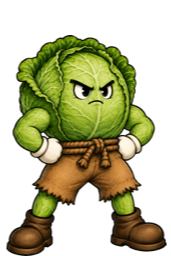
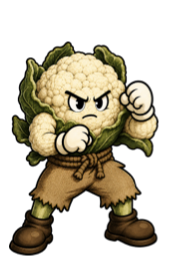
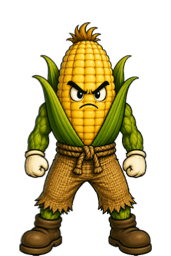
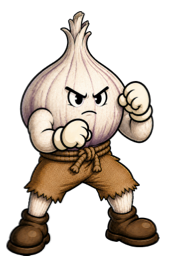
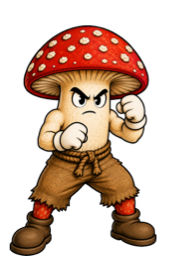
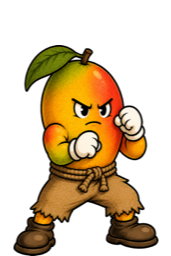
StoreKit 2, non-consumable, $0.99 each (Apple Small Business → 85% net). Four packs of four: Produce (Brocky · Cabbage · Cauliflower · Kernel Cobb, buy now) · Underground (Carrot · Onion · Garlic · Rugged, clear W1) · Skyward — the mushrooms (Chickie · Enoch · Amun · Manny, clear W2) · Cosmic (Goobin · Mansa · Cosmo · Dragon, clear W3). 16 aux fighters, ≤ $3.96 for the set. Buying a pack grants its four characters directly (no diamonds, no beating them). Buy once, restore-wired. Horatio is the buyer.
The diamond shop
42 items in the shipping build (movement, power-ups, on-kill bonuses, skins, backgrounds, enemy skins). Diamonds are earned — Arcade is the farm, Story is capped; a consumable-diamond SKU is the obvious next lever (open item 20).
Redeemable codes
Free unlocks for marketing / vouch; same entitlement as a purchase. The fellow-gamer channel's ammunition.
Fire gates Arcade only, never the whole game
Fire (cap 3, real-clock refill) gates Arcade plays only — Versus is unlimited, Story has no Fire. No pay-to-win; the cooldown is Ike's rest-day medicine on the one farmable mode, not a wall across the app.

The two metrics, in order

MetricRole
Downloadsnear-term headline — the free install tops every funnel
10 leaderboard playersthe KPI gate (unchanged, honest-sessions)
100 pack salesfast-follow trigger → pulls the next content drop. (The old “coming-soon” mushrooms already shipped in the Skyward Pack.) The roster grows 16 → 64 in waves of four.

The web port is the expansion, not the launch. iOS is the launch (live v1.1.3, iOS 17+). The web port comes only after iOS validates — it expands the audience AND homes the NFT/crypto cosmetic layer the App Store forbade (Apple 3.1.1). Engine ruling is open item 9.

Channels & ethics rails

ChannelWeightFacet
App Store discovery (world-first screenshots)0.30James
Fellow-gamer vouch / redeemable codes in chat servers0.25James, Horatio
Short-video clips (dash chain, KO, boop)0.20James, Ike
Potatocore devlog (building in public)0.15Ike
hotpotatogames.com catalog + web board (post-port)0.10all

Ethics rails (binding). No fear-selling · no pay-to-win at the door (packs & cosmetics are lateral) · the board stays honest (real players only, AI/CPU labeled) · one CTA at the exit (RUN IT BACK, or a step toward the next world / a friend). Full strategy: gtm-strategies/hotpotatogames/tater-dash.md.

Section 18 · logged baseline · 2026-08-22

Current State

A snapshot, not a spec — 48 real device screenshots of the shipping build (v1.1.3), logged the day before the home-page revamp so the redesign has a “before.” The rest of this book is the target; this section is what actually ships today.

The incoming IA replaces most of this. The current home (MenuView — logo / video / fire / diamonds / leaderboard / six buttons) becomes a persistent chrome + a 5-tab bottom navbar: Home · Arcade · Versus · Story · Rank (§14). Fire will gate Arcade only; Versus stays unlimited; Story has no fire. Every screen below re-homes under one of those five tabs.

Home & menu → Home + chrome

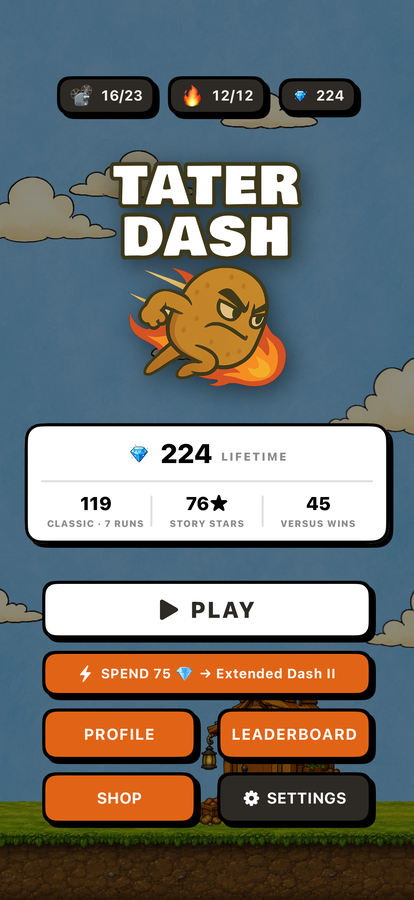
Main menu with title, dashing-potato mark, stats panel, and PLAY
Main menu · stats panel
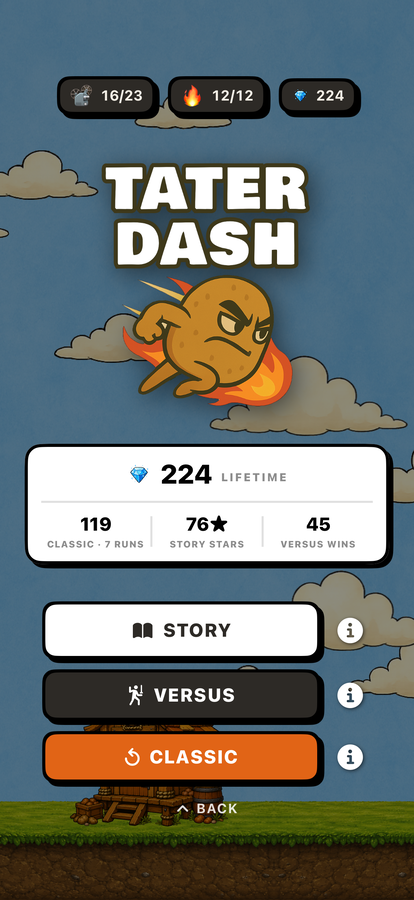
Mode select: STORY / VERSUS / CLASSIC
Mode select (STORY/VERSUS/CLASSIC)
TILT YOUR PHONE SIDEWAYS prompt
The versus rotate-phone ritual
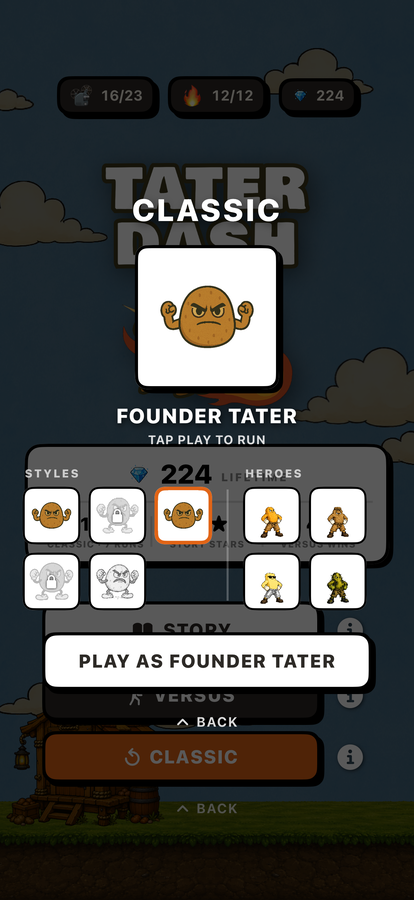
Classic character-select overlay
Classic character select (overlay)

Sub-surfaces → chrome + Shop

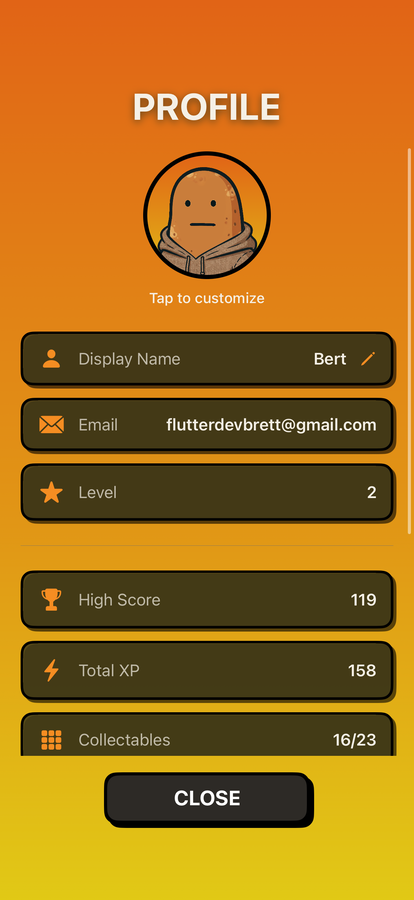
Profile sheet
Profile
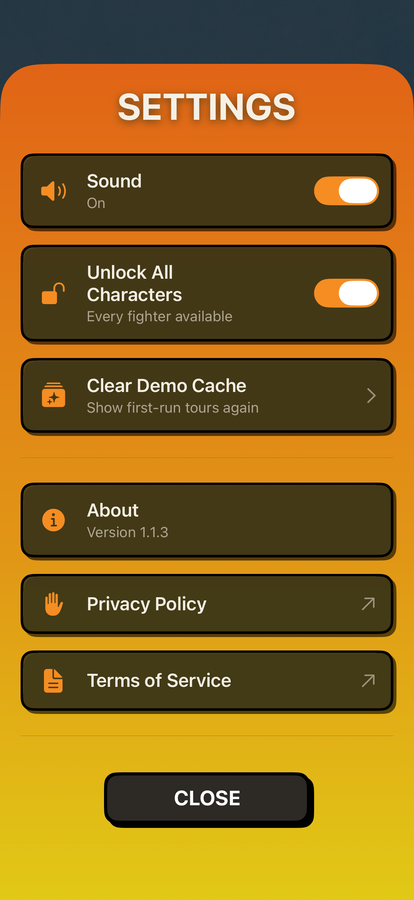
Settings sheet
Settings (note exposed dev toggle)
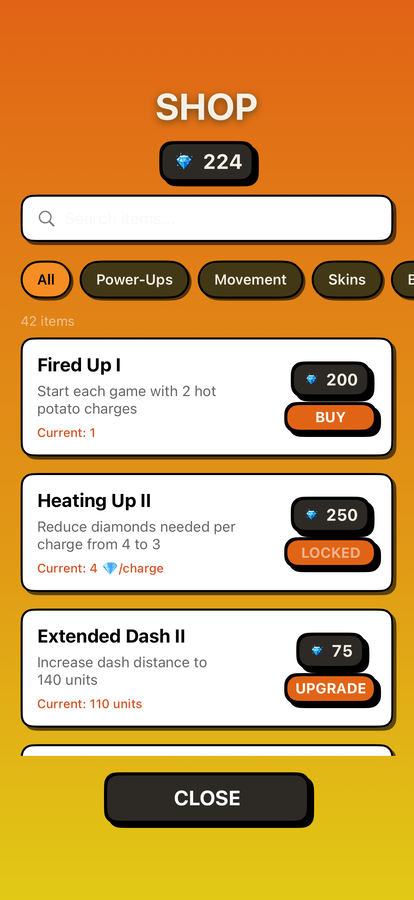
Diamond shop, All tab
Diamond shop · All
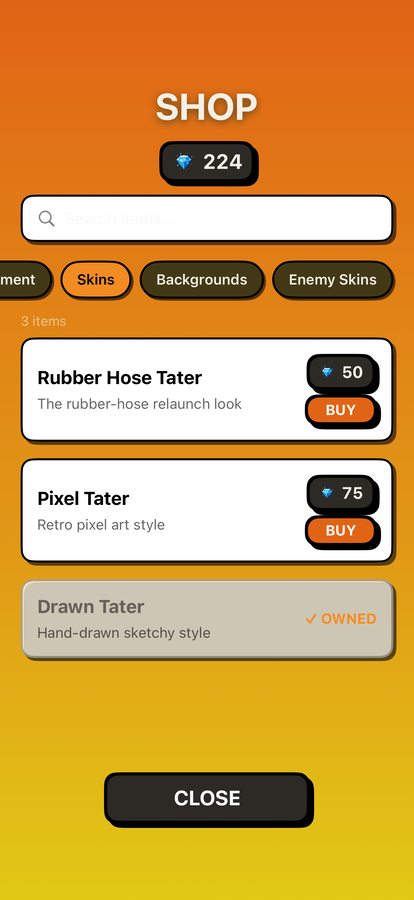
Diamond shop, Skins tab
Diamond shop · Skins
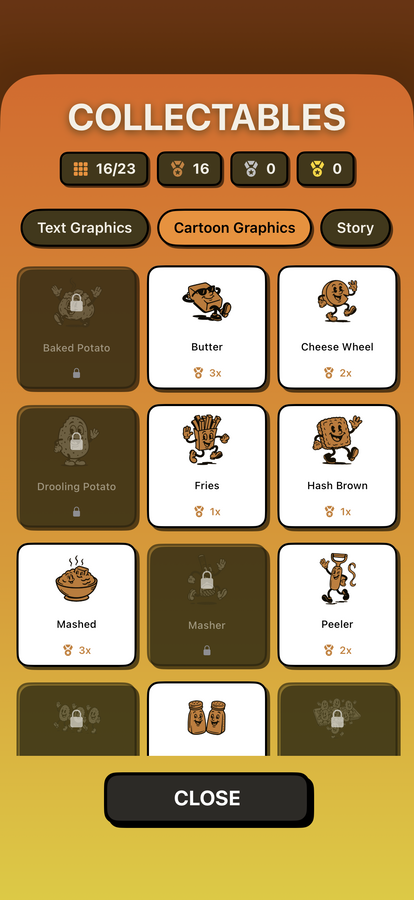
Collectables, cartoon graphics
Collectables
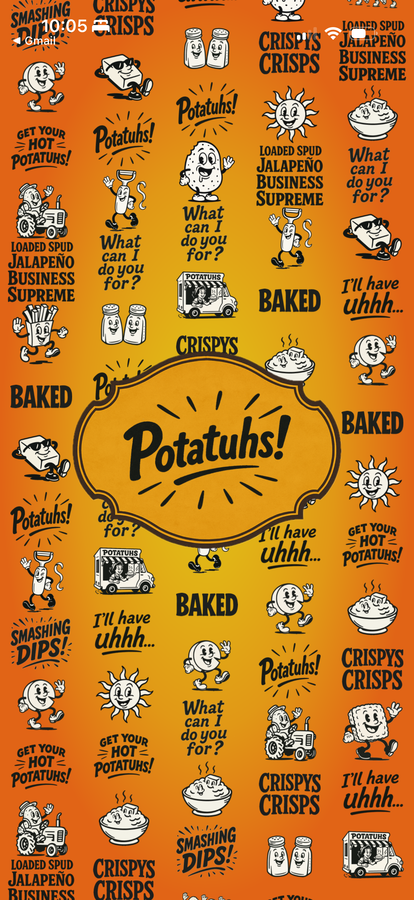
Potatuhs branding pattern
Branding pattern
Loading splash with flaming potato mark
Loading splash

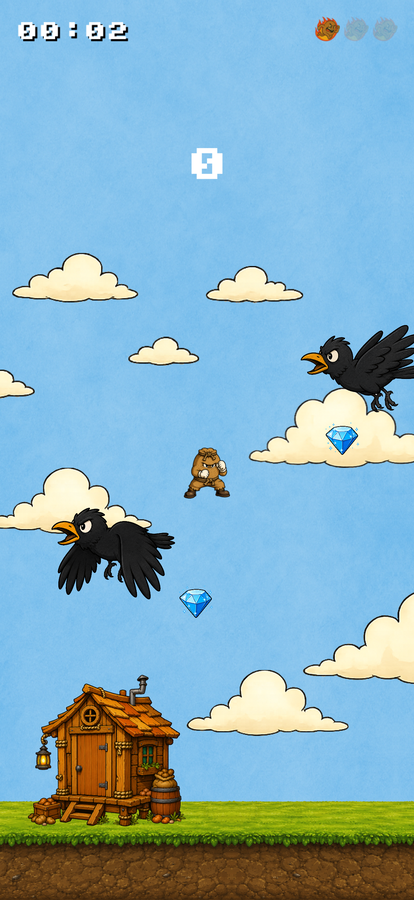
Arcade → Arcade (Classic)

Classic endless-runner gameplay
Gameplay — clean frame
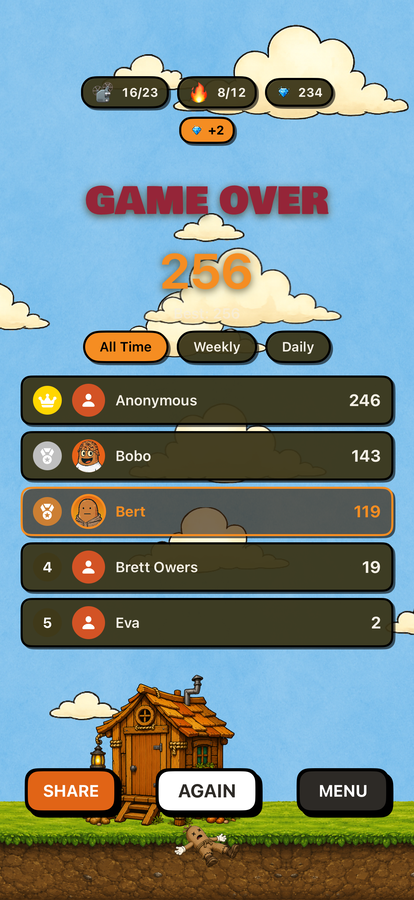
Classic game over with leaderboard
Game over · populated board
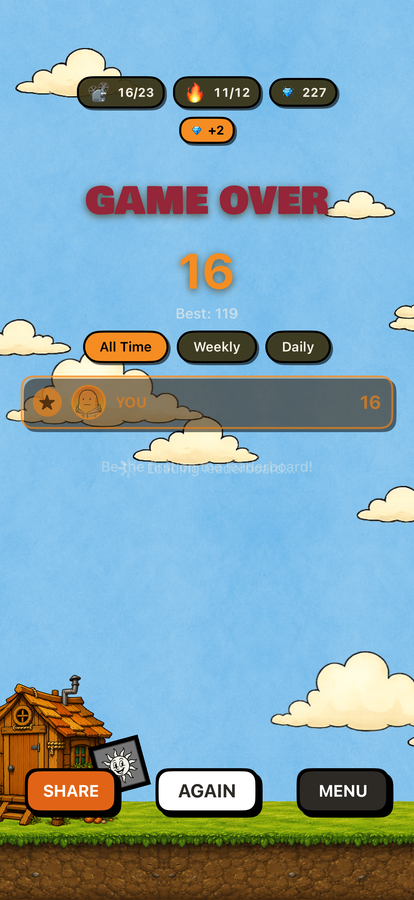
Classic game over
Game over

Versus → Versus (center tab)

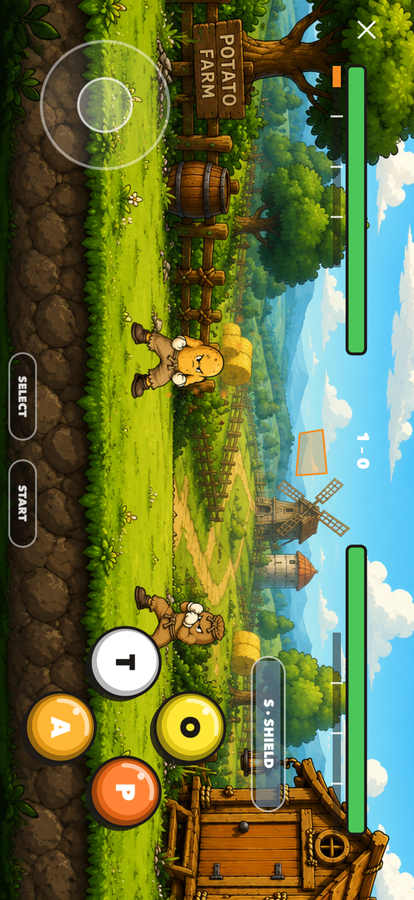
Versus combat at Potato Farm
Combat · Potato Farm
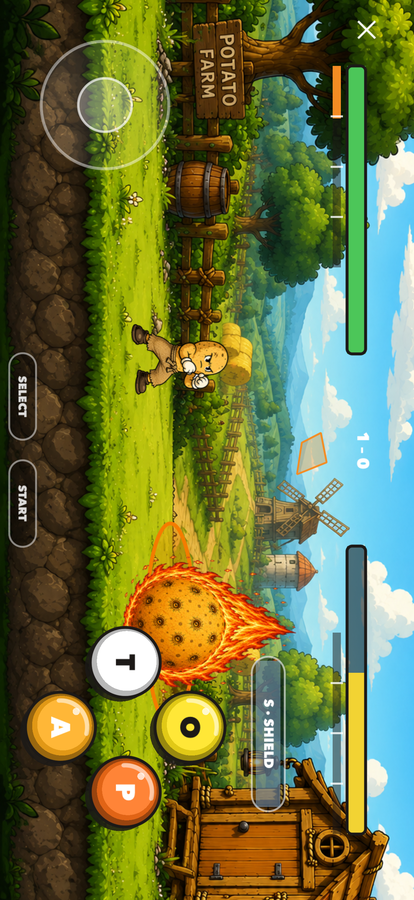
Versus combat, flaming projectile
Combat · hot-potato throw
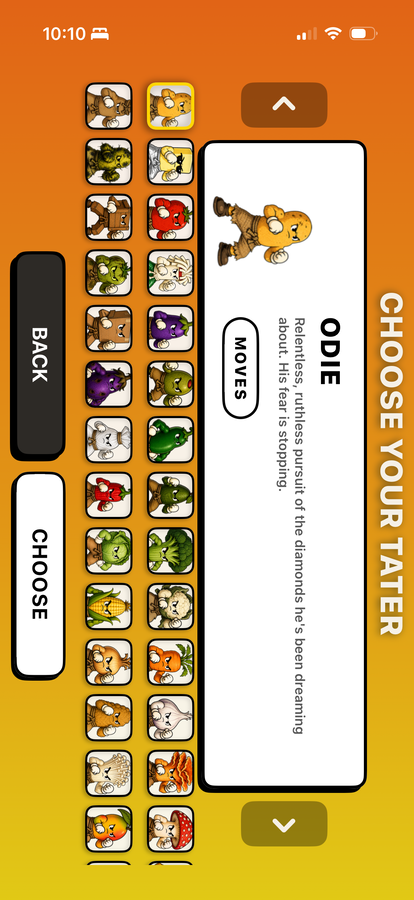
Choose your Tater roster grid
Character select (UI renders rotated)
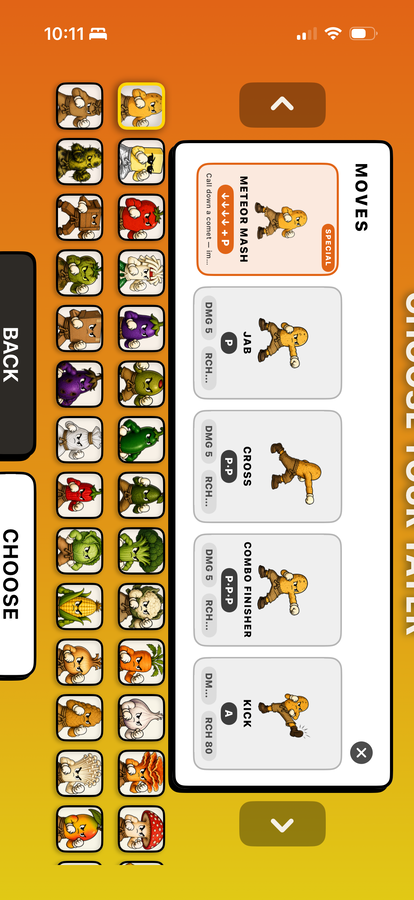
Moves panel
Moves panel
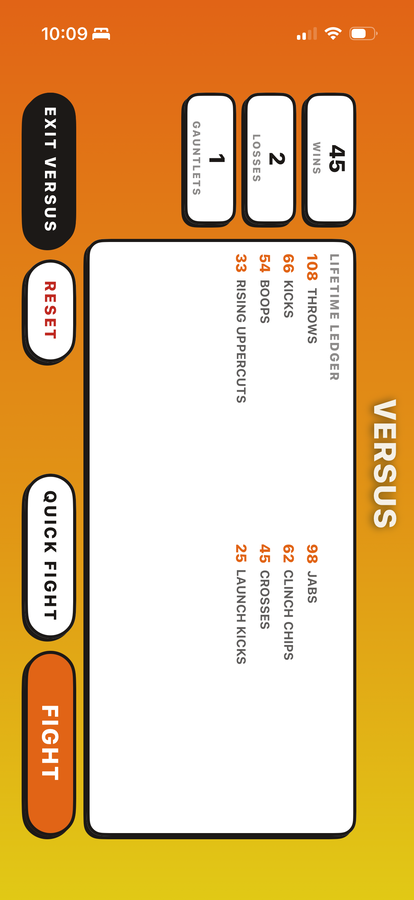
Versus hub / ledger
Hub · lifetime ledger
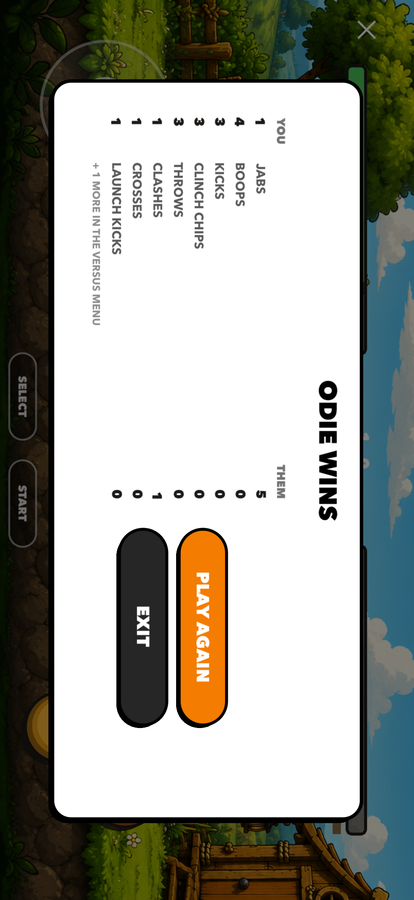
Versus match result
Match result

Story → Story (docked tab)

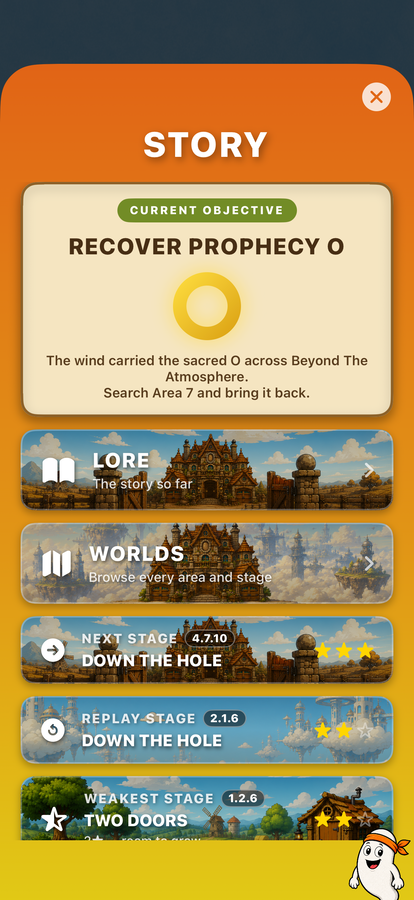
Story hub with current objective
Story hub · objective
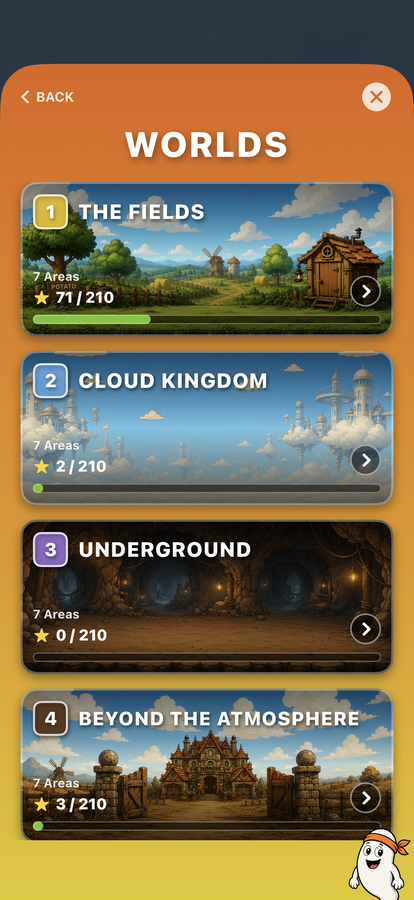
Story worlds map
Worlds map
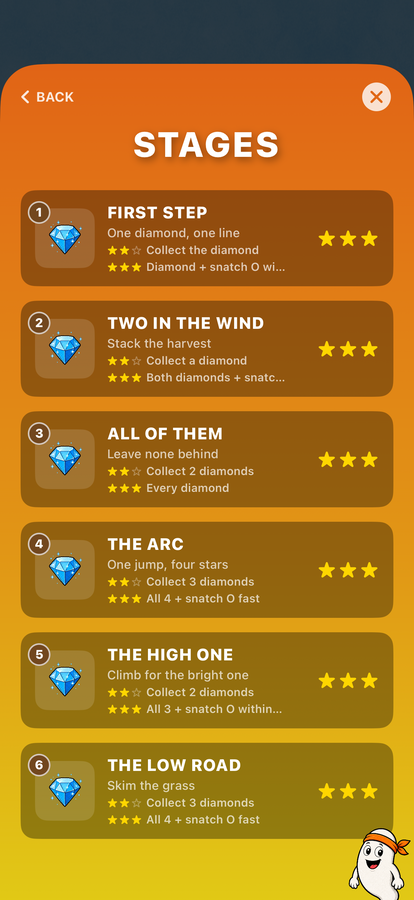
Story stages list
Stages · star objectives
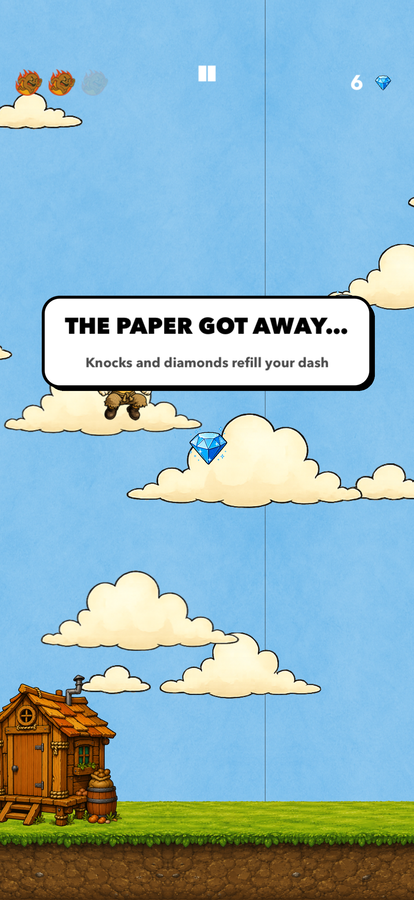
Story in-stage tutorial
In-stage tutorial
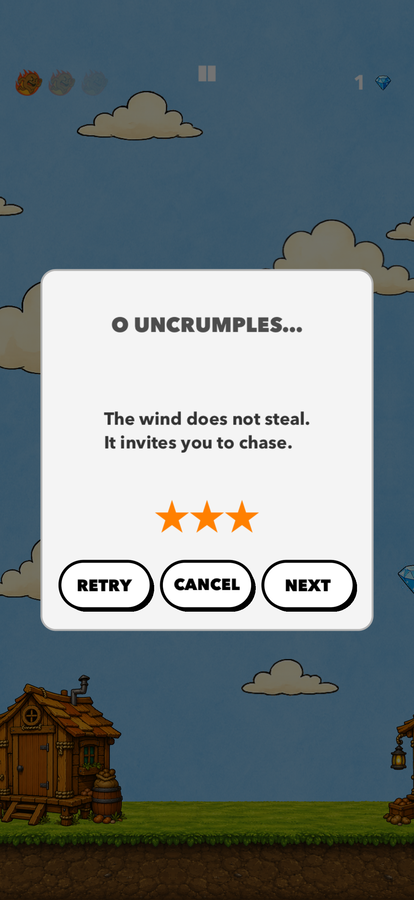
Story stage complete
Stage complete · 3 stars
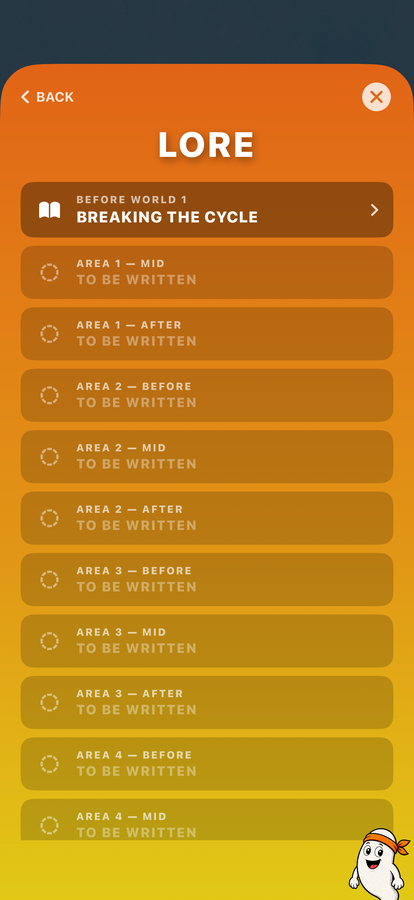
Lore beats with TO BE WRITTEN placeholders
Lore · placeholder beats

Rank → Rank (leaderboards)

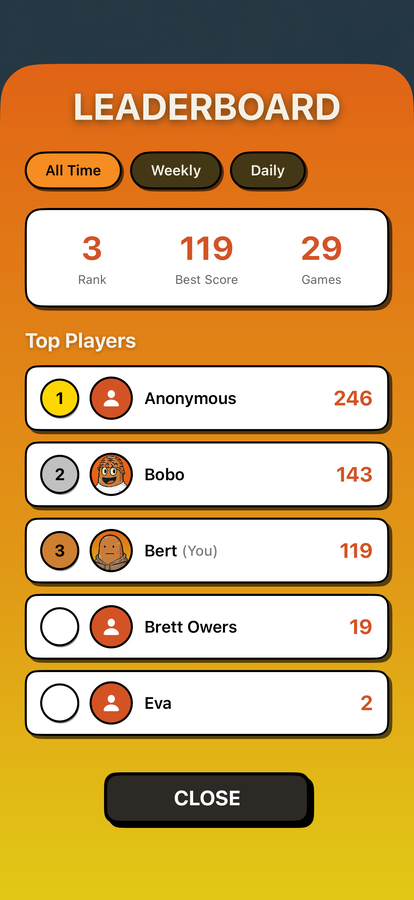
Leaderboard all-time, populated
All-time · live
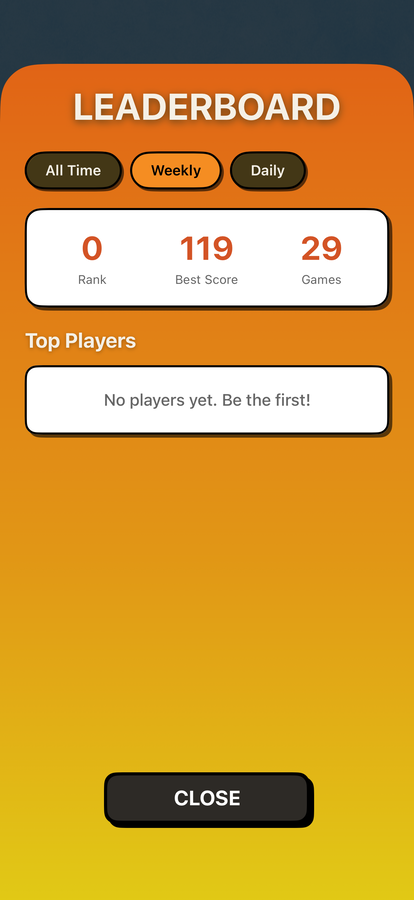
Leaderboard weekly empty state
Weekly · empty state
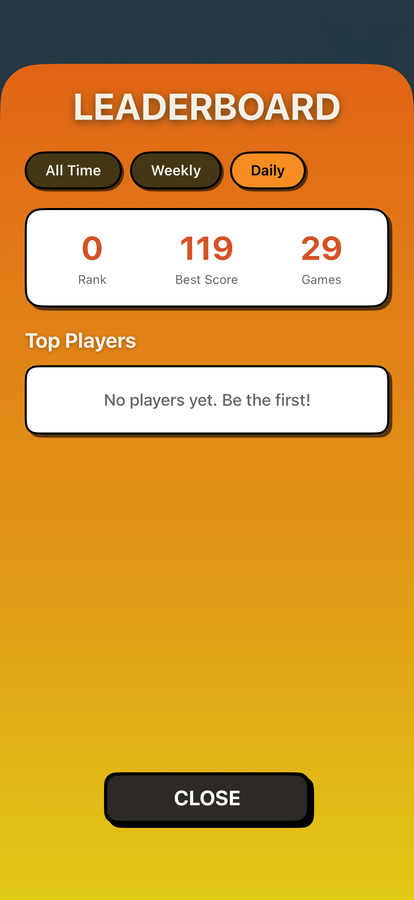
Leaderboard daily empty state
Daily · empty state

Known issues in the shipping build — redesign targets, not brand law

Observed in the screenshots. Brett annotates the gameplay issues a still frame can't show; these feed the lock queue, they are not brand rules.

#WhereIssue
1Versus menusEntire Versus menu UI renders rotated 90° in a portrait frame — the biggest legibility problem in the set
2Shop / Profile / CollectablesCards & rows clipped by headers, CLOSE bars, and the category-chip row
3OverlaysPanels bleed through to the layer behind (no solid scrim)
4Classic game-overScore & leaderboard rows sink into cloud art — poor contrast
5MultipleDebug content exposed to players: “Unlock All Characters” toggle, “DUMMY: STILL”, “Rank 0”, raw “Current: -9.8”
6StoryHeavy “TO BE WRITTEN” placeholders and 0/210, 0/30 progress read as unfinished
7StoryGhost mascot & Odie art float / overlap banners with no ground
8LeaderboardEmpty rank medals and identity duplication — one player appears on two rows
9ShopLow-contrast search placeholder reads as broken
10Versus combatControl cluster (T/A/O/P + S-SHIELD + joystick + SELECT/START) crowds corners, overlaps terrain

What survives the revamp. The flaming-potato mark and title lockup, the honest leaderboard, the rubber-hose fighter art, the diamond currency, and the “TILT YOUR PHONE SIDEWAYS” versus ritual are brand-durable. The chrome, nav, and rotated-UI plumbing are not.